OK, I crashed riding my bike. Not good. It’s one of those things that can happen when you ride. The results are in the pictures.
The two left pictures show my right side elbow and back. The below picture, the bump, is my hip. Normally this part of my hip is flat but the swelling caused the bump, with a little road rash on top.
It was clear skies, low humidity, perfect 70-degree temperature. With eight riders in the group and just over 20 miles into a 54-mile ride, we were traveling aggressively down a flat, relatively smooth asphalt two-lane road, heading toward New Braunfels. I followed close behind three riders, the remaining riders were behind me.
Without warning, I hit something hard, but didn’t see exactly what it was. In an instant, the heavy thud knocked my hands from the handle bar. No hands on the handlebar; no control, so the front wheel jack knifed. I flew off the bike and hit the road, my body’s right side slamming into the asphalt. I remember my hip, arm, shoulder and head hitting all at the same time. I bounced a couple of times and then slid (better described scraped) to a stop.
A graph of my ride gives a better visual of the exact point of the crash. Whatever I hit, I was traveling 24.2 mph based on the detailed data from my bike computer.
What Happened? Okay, I’m alive; now can I think straight??, were my thoughts when my body finally came to a stop laying on my side in the street. Fortunately, the pain had not set in at this point as I lay there totally stunned. A car on the other side of the road stopped and a lady yelled to me asking if I needed help. I said no and waved her on, as I sat up to collect my thoughts and assess the damage to my body and bike. The rest of the riders gathered around and asked if anything felt broken and how I generally felt. I responded, nothing broken I think. I got up and started to walk around, going back about 20 feet to see what I’d hit — a true Texas size pothole. The other riders had missed it, but I unfortunately hit it just right (or wrong depending on how you think about it). We talked about our speed leading up to the crash and agreed we had been going above 20mph. Robert offered to stop the ride and head back. I said no, wanting to push forward the eight additional miles to the planned rest stop in New Braunfels. There, I would assess how I felt and decide to go straight to my house (a few miles down the road), or keep riding with the group to the finish (another 26 miles). The crash only detained our ride for seven and a half minutes before we were back on our bikes and riding again.
Thoughts As I rode, my mind returned to the crash. That pothole jolted my entire body, which gave me a real feeling of shock all over my body, and my brain. I held the image of me flying off my bike, feeling totally helpless, hitting the asphalt, bouncing on the asphalt like a deflated basketball, and then sliding while my skin peeled from my body, HURT! That feeling of helplessness gnawed at me. My head hit hard and cracked my helmet. If I hadn’t had my helmet on, my head, too, would be cracked, leaving me either dead or a vegetable. Not a good thought! That feeling of helpless really bothered me as I continued the ride.
Jeff, riding behind me said I looked graceful in my fall. Hmm, a graceful CRASH, I thought. I always wanted to look good as I slammed into the asphalt. The fact that I didn’t have any broken bones or torn ligaments/tendons surprised me. The thought of hitting asphalt at 24-mph made me cringe, but that is exactly what happened. All I can say is that I could have or should have been hurt much worse; luck or God’s grace was with me.
As we got closer to our rest stop in New Braunfels, I started thinking back to a 2011 Gonzales race where I was riding just behind a racer that crashed hard on rough asphalt, only to be hauled off in an ambulance. That was a bad fall. Then, that triggered my mind to think about other crashes. The most weird, happened in my second ever ride event — the 2010 Katy Flatland. After finishing the 100-mile ride, I slowly cruised (about 2mph) through a parking lot in a down pouring rain, looking for my car amidst hundreds of other vehicles. My front tire suddenly came across a wide and deep crack in the concrete causing my wheel and handlebars to instantly drop pulling me over the bike, head first into the concrete. That cracked helmet saved me from a cracked head and I believed saved my life.
Two years later, in the 2012 Katy Flatland, I crashed into a ditch injuring my shoulder. It hurt for months. Then there was Dave’s ride where I slipped on loose asphalt while taking a corner too fast. That crash hurt the most of all crashes. Finally, I remembered the fall (not crash) coming out of a convenience store parking lot after a brief rest stop with the group. Trying to clip in my pedals to start the ride, (meaning almost zero mph), I lost my balance and fell on my wrist. Not much of a fall but the residual pain in my wrist lasted for a month. Another pain was to my ego which lasted even longer as the group continued to give me grief for my not-so-graceful, zero mph fall.
Yet, my tumbles are not unique to me. Jeff in our riding group had a tough fall on one of our Leakey Challenge rides, but bounced back to beat us back to the finish. Toni fell and broke a bone, and Chet fell on a slick water crossing. Water crossing slips and crashes has happened to others as well. And Bill had a fall on a 100-mile ride to Austin and back. The fall we remember the most came from Hans. He had a crazy fall on slick oil that resulted in hours of hip reconstruction surgery. That one took a year of recovery, but he is back on the bike stronger than ever. At this point you may be thinking that cycling is dangerous. It’s not, as long as you don’t crash!
So What Caused My Crash?
After a little investigation, I discovered the mistake. Marcia admitted (confessed) later that evening that she had forgotten for the very first time to tell me before my ride to be safe. If she had said, “PLEASE, BE SAFE” this crash would have never happened. Case closed, lesson learned!
The Real Concern When You Crash
For all cyclists, the care and health of one’s bike is most important. As soon as I scraped myself off the pavement, I immediately looked for my bike. Fortunately for it, carbon fiber held up a bit better than my human skin. I, along with the other riders, examined the bike and was surprised that nothing was cracked or broken. With a little adjustment to the brakes, my bike was ready to ride again. Not only did we make it to the New Braunfels rest stop but my bike and I were able to finish off the remaining 26 miles with no problems.
Group Ride Done Right
For the last six miles down Smithson Valley road, several in the group took off to make a fast finish. Toni on her tri bike whizzed by, jumping way out into the lead. Robert could have none of that, so he took off to catch her. I then passed Robert and few minutes later Matt passed me in pursuit of Toni. Then we did it all over again, with Robert passing me and Matt, and then me jumping out in front as we all slowly started to inch up on Toni. As we neared the finish, Robert stomped on the gas and finally caught up to Toni with Matt just behind, and me not far behind them. Now that’s riding! We averaged just less than 22 mph over that hilly six miles of Smithson Valley road.
When I got home I looked at my bike and saw the scrape (bike lesion) from the crash. I cleaned it up and took care of the scrape.
After that, I let my bike rest and recover for a few days to see how it felt. I knew it was as eager to get back on the road and fly again, as I did.
We came back to Beaumont with a plan and the finest support team on the planet for another attempt to finally achieve that goal of cycling 100 miles in 5 hours. And we did it, but it certainly didn’t go according to plan!
My riding partner Robert Parker suggested the 5 hour challenge in the spring of 2012 while attempting to do the Fiesta Wildflower 100-mile ride. We failed because of the nearly 3000+ feet of hills. One hundred miles in that amount of time is never easy, but add in lots of hills and it makes it very difficult. It means riding the whole distance averaging 20mph without stopping, or riding better than 20mph with stops. Runners have told me that this effort is similar to running a marathon in less than three hours and 30 minutes. Not a lot of people can do it, but really good runners or elite runners do so easily. Good cyclists can ride 100 miles in five hours by teaming up with others; only the best cyclists can do it solo. Our goal was to just be good.
We made our second attempt at this goal two months after the Fiesta Wildflower in June 2012 at the Beaumont Spindletop Spin – chosen for its flat course with only 600 ft of climb for the entire 100 miles. We failed, but came close. I made my third attempt two months after the Spindletop Spin at the Katy Flatland. Unfortunately, 20 miles into the ride I crashed, ripped my cycling clothes and fell on my shoulder and had to recover for months from that injury. I still completed the ride, but was too beat up to do it in less than five hours. After three failed attempts, I shelved the goal for a while, until now – 2015.
Preparing for the Ride
With some of the worst rainstorms in Texas history, preparing for this long distance ride in the spring of 2015 was difficult. It either rained every day or it threatened to rain. And when it rained, it rained hard, flooding homes and roads throughout Texas, making life miserable for everyone and hard on cyclists. Therefore, the most we could do for our long rides was 50 miles (or less), once a week on weekends and doing one hill climbing ride during weekdays. Parker rode even less as he put much of his time into running. In order to be well trained, we both needed to get in at least two to three 70 plus mile rides, along with multiple shorter rides in the final weeks leading up to Beaumont. We at least got a tough 45 plus mile ride in the Sunday before Beaumont. A very competitive IRONMAN cyclist joined the group that day and pushed us hard. As a result, Parker and I felt confident that we could ride hard and fast for at least 50 miles, but were unsure if we could finish 100 miles strong. Parker and I would need to work as a team to pull each other through the final 50 miles.
The Plan
Join the lead pack (group of riders) and hang with them as long as it holds together. Then, we would work as a two-man team to pull each other through the remaining miles to the finish. I also planned to use my tri-bike to improve aerodynamics for when Parker and I rode on our own. We would try to maintain a 21 mph average speed and make one quick stop at the 60-mile point to refill our water bottles.
To reduce our stop time, our fabulous support team (Marcia, her sister Suzanne and Margaret Broeder Golias) would be at the roadside waiting for us with everything needed for a grab-and-go stop.They would track our location and speed over the Internet though a feature on my new Garmin bike computer called Live Link.
Since the official route was only 95 miles, we planned to add an extra five miles to the course by doubling back on HWY 105 at the 84-mile mark. And, because there are several stop lights the last 12 miles of the route, we added even more miles in the double back so we would finish the 100 miles before hitting the lights. To better understand the plan and the route, see the following video.
The Trip to Beaumont
Parker, Marcia and I left San Antonio around noon on Friday, hoping to get through Houston before the Friday afternoon rush hour traffic. We just made it, only getting caught in a little traffic. We picked up our ride packets at the downtown Beaumont event center start/finish and then went to Casa Olé so Marcia could eat their famous hamburger. That’s right, a hamburger at a Mexican food restaurant. We then went to Marcia’s aunt’s house to stay the weekend. Kathryn and James are such incredibly nice folks. We came in with all our stuff as if we were moving in; they have the longest house I have ever seen. We slept in the western wing and would take trips to the east wing to sit and talk in the kitchen. They also have a little three-legged dog that truly became our friend and inspiration.
It’s Ride Time
Here we are early in the morning preparing our water bottles and getting ready for the ride.
We have a bad habit of being late or just barely making it to ride events, but this time we made it to the start with a couple of spare minutes. Not a cloud hung in the sky, telling us that the sun would beam down on us from beginning to finish in hot 90+ degree temperatures. We had minimal wind, but oddly blowing from the north. At 7am ride organizers yelled “Start” and Parker and I peddled our way to the front. We did not start our Garmin bike computers until 7:02 so we could weave our way to the front and get up to speed. We immediately teamed up with a group of ten or twelve riders that got out front as the ride went down Calder road; they averaged between 21 to 24mph. This is exactly the size of group we hoped to find, traveling at a perfect speed. For the first few miles, the group was disorganized, but by mile 10, the group began to organize into a double pace line.
This pack made riding easy because we drafted behind the front riders, although my heart rate was higher than expected. This may have been because I was more tense than normal. The riders moved around a lot and didn’t keep a straight pace line. But the major reason for the tension and higher heart rate may have been that I was riding my tri bike for the first time in a crowd. Tri bikes are harder to ride and less stable than road bikes. Even worse, they are not very effective in a pack of riders. The aerodynamics of a tri bike has little value when the wind is being buffeted by riders in the pack.
Things clipped along as we passed the 15-mile mark averaging 22.2mph (max speed 27.3mph). Our phenomenal support team yelled along the roadside “You can do it. You can do it.” What a feeling!
Then everything changed as I crossed the 20-mile mark, just under an hour into the ride. We crossed over some especially bumpy railroad tracks. I remember hitting one rail really hard. My one and only spare water bottle bounced out, hit the road and spilled all the water inside. Now I had only my primary water supply left — not enough to get me to the planned stop at 60 miles. Although it only took me a couple of minutes to retrieve my bottle and get back to riding, I now rode alone. More than 200 yards ahead, the pack rode on and I had no one behind me with whom to team up. I could feel an immediate difference in effort to maintain speed over 20mph. Below you’ll find a graph segment of my heart rate before and after dropping the water bottle. Before dropping the bottle, my heart rate averaged under 140bpm . But as soon as I began riding alone, my heart rate stayed consistently above 170bpm. Although I have a normally high heart rate when I ride, sustaining a heart rate above 170 for the next four hours was not going to be easy.
As I turned north on Hwy 326, it got even worse. A slight north wind hit me and I definitely felt it. The road surface changed from smooth asphalt to rough chip seal. My average speed dropped to 20.9mph. Parker and the pack remained in sight, but I had no way to catch them; I would have had to exert too much energy too soon in the ride to catch them. That’s when my first thought about not hitting the five-hour goal arose. Then our amazing support team drove by. I yelled at them to stop at the Hwy 105 intersection, roughly three miles up the road. That motivated me to push a little harder and my average speed jumped back up to 21.5mph. The team awaited me as I entered the Hwy 105/Hwy 326 rest stop, 29 miles into the ride. I felt privileged to be supported by beautiful ladies, cleaning my glasses, wiping my face with a cold towel and giving me a new water bottle. I recognized some of the riders in the pack that I dropped. I thought for a second that Parker may have stopped too, although I hoped he didn’t and stuck with the plan. What happened with the pack is what I had predicted. Although most of the pack stopped but a small group of other riders kept going. Earlier I had noticed that several rides had four water bottles, telling me they planned to go the whole distance without stopping. That meant Parker had a good pack of riders to bullet his way through the wind.
It took me less than three minutes to get in and out of the stop. Back on Hwy 326 going north again, I again remained alone. I did catch up to several riders and asked them to team up, but they only drafted behind me for a while and then dropped off (no relief at all).
Hwy 326 began to wear on me; the whole 21 mile long leg of 326 had a slight north wind. The constant vibration of the rough chip seal was also having an impact. My feet started to numb and that slowed me down. The worst chip seal is chip seal that has been freshly laid and this was new chip seal – a few sections looked only days old. From the Hwy 105 stop to Hwy 770 my average speed slowed to 19.3mph and my heart rate stayed over 170bpm. The 326 leg seemed to take forever.
Then several good things happened. When I turned southwest onto Hwy 770, the road turned to smooth asphalt (felt so good) and I no longer felt the north wind. Next, the portion of the original lead pack that stopped at the Hwy 105 rest stop caught up to me. Oh, what a relief! For the remainder of Hwy 770, we averaged 22.2mph and hit a max speed of 28mph. This highlights the impact on speed that riding with a well-organized group has versus riding alone. The ride suddenly got fun again! With this handful of riders, we frequently traded taking the lead into the wind and I took the lead four times over the 14-mile segment.
We ended the Hwy 770 segment with the one planned rest stop. While the other riders went on to the organized rest stop, our amazing support team met me on the roadside. Not only did they replaced my water bottles, but also wrapped a wet cold towel around my hot neck, provided shade from the hot sun, cleaned my dirty sunglasses and made me feel like a cycling king. Oh what a feeling! I asked if they had seen Parker and they said no. So, I told them to find him because he didn’t have enough water to go the whole distance. Then, I asked them to meet me at the end of Hwy 105 where we turn onto Keith Road.
The stop took only four minutes. I left with my wonderful support team screaming, “You can do it.” I never forgot that, particularly later on when I was riding alone again and the heat became unbearable.
The route turned southeast heading down Hwy 105 and later it headed straight east. I caught back up to the pack that also stopped for a couple of minutes. For the next 12 miles we rode at a good pace of 22.5mph on smooth asphalt road. I noticed as we turned off Hwy 770 and on to Hwy 105, it seemed to suddenly get hot. We left the shady piney woods of Hwy 770 where the temperatures were in the mid 70s, and hit the open hot sun where the temperature jumped to over 90 degrees.
Then, it happened to me again! I hit a bump (not railroad tracks this time), not a big bump but big enough to lose my water bottle. Again, I went back and got it and this time water remained inside. Good, because without it, I could not have made the final 30 plus miles without stopping again for water. But, once again, I rode alone. For the next 10 miles my average speed dropped to 19.7mph. Because I had plenty of water, I passed the big rest stop at the junction of Hwy 105 and Hwy 326. But the pack of riders that I WAS with, did stop and I passed them up.
I did not know this until they caught back up with me another 10 miles down the road near the Hwy 105 intersection and Keith Rd. I once again latched on to the pack and my (our) pace picked back up to 22.6mph, but that was only for a couple of miles. As we approached the turn to Keith Rd, I made my planned turnaround to head back up HWY105 as the pack turned down Keith Rd. Therefore I was alone, again. I told our fabulous support team to meet me at the HWY105/Keith Rd intersection because I wanted to get there help on identifying the turnaround point to come back to the finish. There weren’t there. Darn!
So after 84 miles into the ride I started heading back up HWY105 now heading west to add on more miles needed to get a true 100 miles. I felt miserable. It was hot with no relief from the sun (no clouds at all). I felt demoralized watching other riders head the other direction towards the finish. It just did not seem right “going the wrong way”. Therefore my average speed slowed down to only 18.8mph.
My plan was to go a total of 6.1 miles and then turnaround again to head back the right direction, but I actually made my turn too soon, only 5.3 miles into the backtrack. At least when I did make the turn, I started to feel a little better, because I was now heading the right direction (east) towards the finish. The last 5.3 miles eastward on HWY105 I did increase my speed a bit to 19.7mph.
As I tuned south on Keith Rd my speed slowed down to 18.1mph but I still was at a good overall pace of 20.8mph for my 100 mile goal. I wanted to go faster (my legs not worn out), but the heat began to take its toll now topping out at 98 degrees with no clouds to shade me. The wind blowing across my face was hot, no longer cooling me off. My water bottle was hot so I got no relief from the water. I was thinking at the time it felt like the “Hotter than Hell” ride a few years back when the temperature hit a record high of 109. At one point on Keith Rd my legs began to cramp, but it did not last long. Fortunately I did not have to slow down, but it was a warning sign that I had to be careful. Although the ride down Keith Rd to the 100 finish was only 5.4 miles, it felt like it was taking forever. I remember constantly looking down at my Garmin as I watched every tenth of a mile slowly tick off.
Finally I turned left on to Phelan blvd for the last mile. When I looked down at my Garmin when I hit the 100 mile mark, my average speed for the whole trip was 20mph. I did it! When I looked at the detailed data later on, my actual speed was 20.02 mph. Another way of looking at it was I covered 100.06 miles in 4:59.54, averaging exactly 20.0mph. That’s close, very close, but all I wanted.
I pulled off the road into a car wash and stopped in the shade. I was very hot and tired. I sat down to rest for a few minutes and to my surprise Margaret (our unbelievable support team) drove up. She had rags soaked in ice water that I put over my head. It felt so good. After a few minutes I got back on the bike and headed down the final 5 miles to the finish with Margaret in the car close by. When I came to the I10 overpass (a small hill at best), both my legs began to cramp. I almost had to stop but when I got to the top of the overpass, the cramps went away and the ride to the finish was easy.
Where was Parker?
I did not have a clue where Parker was while I was on the bike. I hoped he was ahead of me, stayed with the pack and the support team found him to offer help and motivation. When I got to the finish and saw Parker, I found out that is exactly what happened. When I dropped my bottle the first time, Parker did stay with the lead pack for much of the ride. He maintained an average speed of 22.2mph all the way to the 60 mile planned rest stop. He stopped at the event rest stop to refill his water bottles (he was completely dry). Unfortunately the support team missed him.
He left the rest stop with only one other person from the pack he was riding with because the others kept going since they had additional bottles for the whole ride. Parker and his new found friend picked up the pace to more than 24mph for the next 10 miles in an attempt to catch up with the lead pack. They did catch the pack but used up valuable energy to do so and Parker was very tired. This is a testament to the power of Parkers legs. I would have had great difficulty in maintaining that pace, and frankly likely not been able to.
He then road with the pack rotating through the ride leaders for the next 7.5 miles averaging 22.1mph. Then finally the amazing support team found him, and Parker stopped for a break at the 77 mile mark on HWY105.
The good news was he received wonderful care from the support team but the bad news was he lost the pack when he stopped. His stop was only 5 minutes but he was now alone (as I was for much of the ride) as he turned down Keith road and on to the finished for the last 22.5 miles.
He did not do the planned turnaround on HWY105 to get extra miles, because he was not as familiar with the planned route as I. Parker’s pace slowed down to 19.4 mph for the next 15 miles till he came to the I10 overpass. He too got cramps in both legs and had to stop for almost 5 minutes to let the cramps work out. From there he rode the reaming 4 miles crossing the finish and making several loops around the nearby streets to get his full 100 miles. With that he completed 100 miles in a superb 4 hours and 51 minutes averaging 21.4mph.
Here is a video showing our progress for the entire route. About two thirds through the video I had to split the screen into two displays because Parker and I took separate paths and the software could not track both of us in a single display when we made the route split.
Thoughts
We were both relieved and pleased that we achieved our goal, 100 miles in 5 hours. That is the bottom line for this effort. But, it would have been even better if Parker and I could have stayed together the whole 100 miles. Dropping my bottle on the railroad tracks was a game changer, disrupting the whole plan. I discovered after the ride that my bottle cage was broken, no way to hold a bottle over any rough road. I do not know how or when it broke.
It is interesting to note that Parker averaged 22.4mph riding with a pack/partner up to the 77 mile mark where he stopped and had to ride alone from that point on. I averaged a similar (but slightly less) 22.2mph over the 46 miles I had a pack to ride. And for the remaining 50 plus miles when I road alone I averaged 19.57mph and Parker averaged a similar 19.4mph for the 23 miles he road alone. Therefore I conclude we were fairly equal in our efforts and results with Parker ending up with a faster time (4:51) because he had much more time riding with a pack.
And I think if Parker and I had managed to stay together and teamed up for all those miles where we did not have a pack, we could have significantly improved the 4:51 time. Also, I think Parker still had more horsepower in his legs that could have surpassed me and broke the 4:30 time.
For me the time riding alone was miserable. Even on the Tri bike (which helped), it was not fun. It is always a lot more fun riding with a friend or group. But, this time it was especially miserable (hot, tiring and boring) and that surprised me. I rode my tri bike a few months earlier in a 12 hour solo race. I had to drop out of that race after 2 flat tires, but I was able to average just under 20mph through 93 miles riding 100% alone and I still had plenty of energy to ride the remaining 6 plus hours. In that effort, riding solo was not necessarily fun, but it was not miserable. I believe the big difference was the sun. In the 12 hours race it was mostly cloudy, the heat was not a problem. In the Beaumont 100, it was 100% clear skies with the sun beaming down the whole ride. The last 50 miles it was especially hot and it drained me, affecting both my performance and enjoyment of the ride.
Even with all that what-if thinking, I know that both Parker and I were extremely pleased with our accomplishment and especially our illustrious support team. Marcia, her sister Suzanne and Margaret were amazing. It felt so good to be treated like kings and they really helped us succeed.
This is my fourth time to do the Tour de Gruene Team Time Trial. Here is a link to last year’s race, providing a good background about the Tour de Gruene.
The 2015 race differed from past events in two ways. First, at the last minute, race organizers changed the route to adapt to flooding along River Road; instead of being 26 miles, the new route was only 14 miles. Being 12 miles shorter, one might think that would make the race a lot easier. Not true. Yes, it was shorter, but the new route had more climbing, which made it much more difficult to go fast. The new route had almost 1300 ft of climbing (91ft/mi), with maximum incline over 11%. Everyone’s average speed was slower than previous years.
Second, my past race partner, Robert Parker had surgery before the race and had to bow out. Bert Miller from our riding group jumped in at the last minute, racing with the name of Robert Parker. Organizers didn’t know that we’d switched riders. Ssshhhhh. Fortunately, Bert was a great race partner and we had a lot of fun. Be sure to ask him what is UpDoc the next time you see him!
Race day began with clear skies and a beautiful morning. The temperature, in the low 50s, felt much colder due to a strong wind, prompting me to wear my long sleeve jersey and leggings.
Bert and I won our age group category with an official average speed of 19.2mph and an overall time of 43:59. My Garmin indicated that our speed was 19.0mph (max 40.3 mph) with a time of 44:16. The difference lies in keeping the Garmin computer going a while after crossing the finish line. If we had done the 2014 longer route, we had expected to do 22 mph. That speed difference illustrates how much more difficult the 2015 route was compared to the 2014 route.
Although we won our age group, the overall winning speed of 25.8 mph shows the difference between our category speed and those truly fast riders. The winning team rode Aero bikes and included Chris Carlson, a nationally competitive USA Cycling category 1 racer. The fastest Merckx class bike team (standard road bike class which we competed) won with a speed of 21.7mph. Both riders on this team are active USA Cycling racers. Although our time of 19.2mph is not that much slower than the winning time of 21.7mph, approaching that speed on the hills of this route is beyond our reach. Of the 41 men’s Merckx racing teams which included all age groups, we placed 15th overall. Not bad!
In a team race, the rider in the lead takes the brunt of the wind force, while the race partner drafts behind. Before the lead rider exhausts, the leader drops back to recover. Partners constantly switch leads throughout the race to maximize overall team speed. In this race I never recovered even when I had been drafting. Throughout the race, I felt tired which is quite unusual. Why? Simple answer: Too many hills that even when drafting behind Bert I was hitting it hard as I could up the hills. Therefore, I never had a break to catch my breath; my heart rate showed it, averaging 182bpm and topping out at 192bpm. That’s a high heart rate and 182 bpm is not something I could sustain for a long ride. Only briefly did I hit a low of 161 bpm, which occurred near the beginning.
It would be fun to race on a truly flat route to see just how fast we could have gone, maybe someday. Far from flat, this race felt more like our weekday hill rides (called “Hills of Terror” rides averaging around 100ft/mi). At least with our Hills of Terror rides we do take time to recover between hills ,but no recovery breaks on this race.
Although this is the first time for Bert to do this particular race, I know he really enjoyed it and was a great partner. We did everything a good race team could or should do to help each other. Lots of fun, thanks Bert.
Below are pictures of the race. Although all these pictures show me in the lead, the truth is that both Bert and I shared the lead equally throughout the race, doing exactly what a good team should do.
What do you do when the brother of a long-time member of our cycling group comes for a visit from the Netherlands? Answer: Take him to Leakey to ride some of Texas’ most challenging hills.
Wim Heijmans is a super nice guy and an excellent cyclist. He gets this from his older brother, Hans and their European heritage. He is a member of a large cycling group in the Netherlands and rides with us when he comes to visit in the U.S. We claim him as a member of our riding group even though he frequently rides with that other group in the Netherlands. By the way, I love that name Wim.
What is the Leakey Challenge?
The Leakey Challenge is a training ride that our group does a couple of times a year. This is not to be confused with the Leakey Death Ride that has a few big climbs over 150 miles in the same Leakey area done over three days. The Leakey Challenge is a concentration of five big hill climbs over 56 miles starting in Medina, Texas and continues along Hwy 337, passing through Vanderpool, and loops back a few miles short of Leakey, Texas.
It encompasses some of the most beautiful parts of the Hill Country and has some of the toughest hill climbs in Texas. This ride has three really long hills along Hwy 337, making this ride a true “Challenge.” Since this is an up and back ride, we hit two of the three hills twice for a total of five tough climbs over 5100 ft. It is a great route for cyclists wanting to do serious training or riders who just like leg pain and feeling like death is eminent. Therefore, you frequently see cycling teams and other crazy people in the middle of nowhere climbing those “terrible” hills that never seem to end.
Wim arrived in the states on Thursday afternoon after an all-day flight from Europe. To ensure that he got a minimal amount of sleep, we all took off work Friday so he could ride shortly after arriving in the U.S. That was the only way we thought we’d have a smidgen of a chance to keep up with him. It didn’t work!
As Friday approached, the weather looked ominous, good chance of rain and fog. Going down a long, steep hill on wet slicked roads is more than a bit scary. By Thursday midday, we questioned whether a ride in this weather was wise. However, by Thursday afternoon Hans declared, “Let’s do it.” So we showed up at 8:00 a.m. on Friday, February 20 in Medina with overcast skies and chilly temperatures, but no rain or fog. Robert Hogue, Toni Gonzalez Flores, Bill Sanders, Brain Moore, Elaine Pena, Jeff Porter, Bert Miller, Peter Beverage, Hans Heijmans, Wim Heijmans and I all gathered for some good cycling. Sorry I don’t have a picture to show our pretty faces.
For the first 12 miles, we had an easy gradual climb — a perfect warm-up before hitting the first good climb. The first big hill is a Cat 4 climb almost a mile long, (350 ft. of climb with a 12.5% max incline.) It’s the shortest of the five hills, but still wakes the legs up to pain. The 1:40 minute video below is sped up 4 times the actual 6.45 minute ride time.
Wim, Bert, Peter and Robert led the climb; I remained a little ways back in the middle of the group. After reaching the top of a plateau, we then hit a series of rollers (small hills) for the next 2.8 miles and then finally took the big descent. The descent was a fast 1.2 miles, going 38 mph down a beautiful road chiseled through the rough terrain. We had two thoughts as we flew down: 1) oh, what fun, and 2) oh, the pain we’ll have when climbing back up later in the ride.
We continued on for another 5.5 miles through the “major metropolis” of Vanderpool and on to the next big climb. This second climb, known as The Wall was longer and bigger than the first (Cat 3 – 2.3 miles, almost 600 ft. of climbing and 11% max incline). Although it took just under 12 minutes to complete the climb, it felt like an eternity as our legs screamed in pain. Again the below video is sped up 2.8 time so it does not take long to view.
As we crested the hilltop, we road across a brief plateau and then a fast 36 mph descent for the next two miles before hitting hill #3. That gave us only five minutes for recovery, so we hit the third climb with our legs still tired.
The third climb was a Cat 3, 2.3 miles, 560 ft. of climb with max incline of 9.2%. This climb made us feel as if we were winding around a mountain. The road bends sharply around tight curves with steep ledges, overlooking large valleys. Cyclists on this route think the end of the climb is just around the next corner only to realize more climbing and turns await.
After climbing for just under fifteen minutes (again it felt like eternity), we finally reached the top. At this point we were 28 miles into the ride and at the halfway point. If we had gone another seven miles down the hill, we would have gone into the town of Leakey.
We waited for everyone to get back together, then turned around, and started back down the hill we had just climbed. Then came the fourth big hill (the back side of our second big climb). This is a Cat 4, 1.2 miles, 480 ft. of climb with a mix incline of 9.5%. By this time, the legs started to ache a little more as we climbed. The stress of all the climbs were adding up to increasingly tired legs.
As with all good hill climbs, when cyclists reach the top and the road levels off, a feeling of relief exists while the leg pain persists. Then finally — the recovery as we pick up speed looking forward to a fast and fun downhill descent. We especially look forward to this fourth hill descent because it leads straight to our rest stop at the Lost Maple County Store. Everybody stopped at the store except for Brian. He kept going to catch up to Elaine, and Bill who decided not to do the last climb, returned early.
Lost Maple County Store is where we refill our bottles, eat anything with carbs and rest our legs for a few minutes. We do this knowing that we have one more hill to climb. This fifth hill, known by many as the Eagle’s Nest or Condor’s Nest is the toughest of the ride for several reasons. It has the steepest grade of all the five hills of 12.7%, lasting 1.1 miles climbing 495 ft. The climb looks intimidating as the road is carved deeply into the rugged hillside. It’s deceptive, because just as a rider feels the climb is over as the first curve approaches, cyclists soon discover yet another half mile of climbing to go. Lastly, the legs are already tired from the previous four climbs. Admittedly, we got a chance to rest at the store, but the 3.5 miles from the store to the base of the climb is a constant 280 ft. of climb unto itself with a max incline of 5.7%. Therefore, cyclists are tired again as this last climb begins.
As we approached the climb, several of us, including Peter and myself, questioned how well or not so well, we would do. Some suggested stopping halfway up the hill so we could take pictures. I purposely did not push it hard on the previous climbs just so I would have something left for this last climb. The last time we did the Leakey Challenge, I completely exhausted myself on the last climb (it hurt) and I had nothing left to finish the last twelve miles back to Medina.
We started the climb as a single large group, but we quickly spread out with Wim, Peter and Bert in the lead. Robert and I remained a short distance behind the lead, with the others somewhere behind us. For the first half, I stayed in my seat to conserve energy. At one point I thought about trying to catch up to the leaders, but not enough energy remained in the legs, so I decided to ride conservatively. I just wanted to make sure I made it to the top and had enough for a strong ride back to Medina. We came to the halfway point where we had planned to take the group picture, but we kept going without stopping. I finally got out of my seat and ground the last half mile to the top. As I got to the top, I was tired, really tired, but not completely exhausted as the time before.
Now at the top of the hill the typical thought is that the climb is over and a fun and fast downhill remains. Not quite, we had another 2.8 miles or rollers (small climbs) totaling 270 ft. with a max grade of 10.5%. Normally 270 ft. of climb is not difficult, but we just finished the toughest climb of the ride without time to recover. To stay up with the leaders, I had to pick up the pace. Therefore, we averaged over 17 mph through the rollers and then came to the last and final mile long descent hitting speeds over 40 mph.
From there, we still had twelve miles of a gradual descent back to the finish. In the last Leakey Challenge ride (June 2014), the big climbs exhausted me; I had nothing left, and slowly crept into Medina. Also, the summer heat (97 degrees avg.) completely sucked what energy I had left. I averaged barely 16 mph. Those 12 miles felt miserable the whole way. For this ride, I had energy left, and the temperature for the last 12 miles averaged only 60 degrees with no sun — perfect! So, I rode with the lead group, averaging almost 21 mph and enjoying it all the way.
Finished
The entire ride covered 56.2 miles taking 3 hours and 44 minutes of moving time to complete. That is only one minute faster than my best ride back in 2013 and two minutes faster than June 2014. Our total time from start to finish was 4 hours and 13 minutes, significantly better than previous rides which were over four and a half hours.
Something I noticed about our special guest, Wim. He led the group on all the big climbs, but on several climbs as I neared the top, I saw Wim turn around and head back, passing us going the other way. He would later catch back up to us, to continue the group ride. At that time I thought he was delirious, possibly disoriented from being tired and confused about his directions. I asked him about it after the ride. He said he was training to be ready for his team back in the Netherlands and wanted to get in some extra distance. So, I concluded he was a little delirious!
Speaking of unusual things, can’t remember ever seeing someone climb tough hills, like those on the Leakey Challenge with a tri bike. Tri bikes aren’t designed for hills. With these bikes, a cyclist must work a lot harder to climb a hill compared to a good road bike. Knowing that, Toni brought her tri bike anyway. She wanted to train for her upcoming half Ironman this year and full Ironman hopefully next year. The questions were: Could she climb these hills? Could she keep up with us? Could she go the whole distance? Well, she did it all. She climbed all the hills without stopping, stayed right with the group and completed the whole distance. Tony is tri bike ready!
Also interesting to note: we almost canceled this ride because of rain. It turned out that we never saw a single drop of rain and the weather was almost perfect. Yes, we had chilly temps, but we dressed for it, and therefore felt great. No heat or sun beaming down on us. Can’t ask for much more than that!
So as it hit noon, what would cyclists do after riding 56 miles across some of the toughest hills in Texas? EAT! We packed up our bikes and walked across the street into the Love Orchard Café. Most everyone got hamburgers and fries. I got a hamburger and an apple pie. My thinking? How can you go into a café that owns its own apple orchard and not eat an apple pie? I love apple pie!
Final Thought
It was great having everyone together for a good tough ride. The Leakey Challenge is a challenge and Wim is an excellent cyclist. We all had a great time. After we finished, all but Bert and Peter headed back to San Antonio. Bert and Peter just happened to schedule a church retreat in Leakey that weekend. So they drove the other way to Leakey to learn more about their faith and hopefully they prayed for good cycling weather, no flat tires and strong legs.
We averaged 20.9 mph, taking third place in our age group in the road bike class.
We may not be as fast as Lance Armstrong, but it doesn’t matter because we have a ton of fun doing the Tour de Gruene two man time trial race. Yes, we do take performance enhancing substances to impede our performance, including chocolate chip cookies, brownies, ice cream and apple pie. I have overdosed on brownies many times and I am still addicted to them today; I plan to remain addicted well into the future.
Background
For more than 30 years, the Tour de Gruene has been well known to cyclists for its fun tour ride through the Canyon Lake hill country and for its single man and two man time trial races. The races are for both pros and amateurs. Lance Armstrong has done the Tour de Gruene three times and was scheduled to race this year, but his teammate had to drop out at the last minute Link to article. Here are pictures of Lance from the 2008 Tour de Gruene.
For us the race is a chance for average cyclists to ride among the pros/serious cyclists and feel the excitement of a well-organized race. Compared to the single man race, the two-man is the most fun because you have a teammate with whom you must be in sync and coordinate throughout the race in order to do well. Unlike the long distance endurance rides that I do all year, this race is all about speed and it’s really fun.
This is the third time I’ve done this race, and each time my race partner has been my good friend Robert Parker. Parker is a competitive athlete in both running and cycling. Just two weeks before the Tour de Gruene he ran a 100-mile relay (his portion, 25 miles) through rugged hill country trails. Two weeks after the Tour de Gruene he ran a 50-mile cross country race. With all the running, Parker has had little time to prepare for the Tour de Gruene. Although we did have a chance to do one practice ride on the course (averaged 20.5 mph) the week before the race, and we also did the Leakey Death Ride (193 miles) three weeks before. But, this alone is not enough training to do well in a time trial race.
For myself, I have been doing considerable riding (I don’t run anymore). I mainly rode with my regular group on weekends and once during the weeks. I also rode on my own once a week leading up to the race, doing sprints that simulate the actual race course. Training has been different this year. In the past, I would do only dedicated training on my own starting in October and not ride with the group. This is the best way to improve Time Trial race speed, but I enjoy riding with the group so much that it’s hard to turn down a good group ride.
191 teams road in two bike classes – Aero and Merckx (Road Bike). Merckx class is the traditional road bike that we typically see on the streets. It’s named Merckx in honor of Eddy Merckx, a 1960s and 1970s professional cyclist considered to be the “greatest and most successful cyclist of all time” (VeloNews). He too also did the Tour de Gruene time trial race twice back in the 1990s.
The Areo class consists of the new aerodynamic Time Trial and Tri bikes that you see used in races by pros and serious cyclists willing to spend the money. These bikes provide a significant advantage because they dramatically reduce wind resistance which is the biggest inhibitor to going fast. Robert and I were in the Merckx class.
The Race Course
The race course is 26.4 miles long with 1324 ft of climb; according to my data (official website says 1490 ft). This course is tougher than years past because there is more than 250 ft of additional climbing, making it harder to have a fast time. This year’s course can be divided into six segments:
River Road – 7.4 miles of flat road, opportunity to go fast
Hueco Spring Loop – 4 miles, start of hills, steep incline
Hwy 46 – short .7 mile flat segment, chance to go fast and prepare for the long hills
Hwy 2722 – 8 miles of four good hills
Hwy 2677 – 4.2 miles downhill, opportunity to go fast again
River Road Finish – 2.1 miles to finish the race
The Race
November 9th was a great day for a cycling race. Although it was cold, it was very dry with only a slight wind. Each team lined up at the starting gate in race number order and was given the countdown to start riding every 30 seconds. Our team was number 153 with a start time of 8:48:30 a.m. We barely made it to the starting gate on time and therefore got off to a terrible start, as you can see in the video. For the first few seconds I wasted time trying to clip into my pedals instead of grinding the crank to quickly get up to speed.
The River Road section of the race is just over seven miles of flat road before hitting the hills. This is where we needed to go our fastest and raise our average speed. Having a tight pace line is important during this section because we hit speeds from 18mph to 34mph causing wind resistance to be a factor. We each led (pulled) the pace line for a few minutes while the other drafted behind, rested and then switched positions. Here is another video as we rounded the corner from the start. Here you can see that we picked up speed and got into a good pace line position to draft behind each other. At that point we were averaging 25mph.
About three quarters of the way down River Road, we passed our first team of riders (the team that started 30 seconds before us). Although Parker and I did not say anything to each other, we both had a satisfying feeling that we’d passed other riders. This team was on standard road bikes like us, but we especially enjoy passing Aero bikes teams when given the opportunity.
As we proceeded further down River Road, we rode in perfect harmony, although at one point Parker asked me to slow down. Normally it’s me that must ask Parker to slow down, but this year he just did not have the time to train. I repeat, normally it’s me that can’t keep up to Parker.
By the time we ended the River Road segment, we had averaged 23.2 mph, a very good pace and almost two miles per hour faster than our practice run the week before. This marker is important because the end of race speed should be approximately one mile per hour slower, based on the practice run. On the practice ride our pace was 21.3 mph along River Road and we ended the course with 20.5 mph (.8 mph difference). This predicted capability held true for other training rides I did, as well. That means we should/could have had a finishing speed of 22+mph for this race. Good news because I’d targeted 21.5 mph for the race; I thought 22 mph was beyond our ability for this course.
From River Road we entered the Hueco Spring Loop segment, and from this point and for the next 12.5 miles, we hit constant hills climbing over 1000 ft. During this segment, we hit the steepest parts, maxing at 9.6%. The pace line does not matter on the hills because our average speed dropped down dramatically on the climbs, but we still averaged 17.5 mph for the whole Hueco Spring Loop (exactly the same pace as our practice run).
Not too far into the Hueco Spring Loop we suddenly and surprisingly were passed by another team. In the past, that would have motivated us to pick up the pace to catch them and get back in front. Not this team though, they were going fast and we had no way of catching them. Then another team passed us a few minutes later. A real downer, two in a row! Considering that this team didn’t have the speed of the other, we picked up the pace, staying fairly close behind, all the while hoping at some point to pass them.
As we crested a hill I had to slow down one more time for Parker. This time he commented about the difficulty in keeping up. A retort was not necessary because I knew Parker would come on strong at the end. And that is exactly what he did. As I slowed down to let Parker catch up, he then passed me and suddenly I had to stomp on the pedals to catch back up to him. I noticed how tired I got and it surprised me. This moment of feeling overly tired will came back to mind when we got into the hills on Hwy 2722.
As we turned on Hwy 46, we had a short .7 mile decline. We should have quickly picked up speed but we averaged for the first half mile only 19mph. Then we did get up to 23mph for the last portion as we turned onto the next highway. Hwy 2722 holds the back side of the race, consisting of an eight mile stretch of four long hill climbs. Our plan was for Parker to take the lead climbing the hills and I would take over on the decline. Parker is usually stronger on the hill climbs, which would enable me to conserve energy so I could take the lead as we crested the hill. From there, I could lead with an aggressive attack of the downhill.
As we started the climbs, I noticed I was not in my natural rhythm and felt the need to go faster; I slowed down to stay behind Parker. By slowing, I assumed I would conserve energy and be less tired at the hilltop, so I could push it hard on the downhill. That tactic didn’t work, because I was still tired at the top; I think this was due to being out of my normal rhythm. Although I tried to pedal hard on the downhill, we just didn’t go as fast as I thought we could. Going downhill should have been easy, but I felt tired on all four hills. It’s the same tired feeling I felt on the Hueco Spring Loop when I had to catch back up to Parker.
On the second hill when I felt especially tired, something unusual happened. My left eye started to blur, as if my glasses had fogged up, but they hadn’t. Although my left eye didn’t hurt, I couldn’t make out any detail with it. Especially bothersome was that I couldn’t see three dimensionally. The blurriness remained for the rest of the race, but I got used to relying on the right eye.
Remember the team that passed us on the later part of Hueco Spring Loop? We had tried to stay close in hopes of later passing them. Well, the further we traveled down 2722, the further and further away they got, until finally they were completely out of sight. I will mention this team again when I analyze the results. Fortunately for our ego, we did pass several other teams that appeared to have a harder time on the hills than we did.
The 2722 segment ended at the top of the fourth hill. As we continued on, I felt we did not go as fast as we should have. It almost felt as if we had a strong wind against us, but we didn’t. Comparing the race with our practice ride, the data proves that we did not do well.
On each of the four hill climbs and descents, we were slower on the race than the practice ride. While I led on the descents, we did hit a top speed of 38.6 mph, but that was still slower than the practice ride that hit 41.1mph. For the whole 2722 segment we averaged 18.4 mph compared to 19.9 mph on the practice ride (1.5 mph is a big difference). That should not have occurred. We rode hard on the practice ride, but not as hard as in the race, which should have culminated in faster times. Although we had a super start on the River Road segment, we lost all that advantage on 2722. As a result, the practice ride turned out to be faster than our race up to this point. Here is a video showing how the two rides compare and you’ll see as we turn the corner off 2722 onto 2673, the practice ride (blue dot) is slightly ahead of our race (gold dot).
Were these thoughts about rhythm worthless rationalization or did we simply push ourselves too hard on River Road, exhausting ourselves as we hit the hills on Hueco Spring Loop and Hwy 2722? If truly exhausted, we would have not been able to do well for the remainder of the race and especially on the next 4.2 mile segment along Hwy 2673.
As we headed down Hwy 2673, we picked up the pace going much faster and with greater ease, as Parker and I traded off the lead. Yes, we still had energy and it felt great. We were back in rhythm and it felt like we were flying through the air. I could see another team about a quarter mile ahead and felt we could chase them down. We pressed hard, but surprisingly were not catching up as fast as I thought we could. Then I noticed they were an Aero bike team. We were on a straight downhill road and Aero bike teams have a clear advantage in that situation because they can glide though the air much faster. As we came to the end of 2673, we kept pushing hard and began closing the gap. We averaged 25.7mph for the 2673 segment (2.7mph faster than the practice ride) proving we did not wear ourselves out on the Hwy 2722 hills.
As we turned the corner back onto River Road for the remaining 2.1 mile finish, we finally passed the Aero bike team. But only a few seconds later, they passed us. We then turned on the gas and passed them again; I thought for sure they’d pass us again, but that didn’t happen. Parker told me later that he saw that they were “out of gas.” As we got to what we thought was the last mile, I expected Parker to take off and quickly pass me for the final sprint. Indeed he did and he took off, which caused me to go faster to stay right on his tail.
We suddenly and surprisingly came to the finish line much faster than expected. We both thought the finish to be further down the road. Parker told me later that he would have started his “patented sprint” sooner, if he knew the finish line was so close. That miscalculation on our part cost us valuable time, because Parker is really fast on the final sprints.
Race Results and Analysis
In the end, we finished with an average speed of 20.9 mph (1:15:50 time), only .4mph faster than our practice ride. With that we still took 3rd place in our age group and 16th out of 54 all men teams in the Merckx class (road bike). Out of 191 total teams, we took 84th (men and women in the both the Merckx and the Aero class). This included all the serious cyclists and pro riders, as well. The winning time for the entire race was 28.1 mph won by John Korioth and Brandt Speed. John Korioth is a friend and riding partner of Lance Armstrong, as well as past winner of the USA Cycling Masters National Championship.
If we had reduced our time by only 23 seconds, we would have achieved the 21mph mark. That was easily doable because we got such a slow start. Plus, we miscalculated the finish for Parker’s sprint. If we cut two minutes off our time, we would have achieved the targeted 21.5mph. All we needed to do was match our practice run pace on the 2722 segment (which was exactly two minutes faster than our race time), and our race speed would have been 21.5 mph. That means 21.5mph was truly achievable for us, not a stretch goal. It is interesting to note the team that passed us on Hueco Spring Loop that we tried to keep pace ended up with 21.5mph. We should have been able to keep pace with them and beat them in the end.
In order for us to have taken 2nd or 1st in our age group, we would have had to knock off five plus minutes of our time, because the top two places in our age group was 22.1 mph and 22.2 mph. That speed was not within our reach this year. The winner of all Merckx class (road bikes) had a speed of 23.9mph. That is fast on a road bike. These guys are out of our league and part of a highly competitive USA Cycling racing team.
Although we did not hit the targeted 21.5 mph, I am (we are) still pleased with what we did for one simple reason: that race was fun! Different from cycling in an endurance ride or running a marathon, or even an individual sprint race, this race requires two people to work closely together. When that’s done well, it is so much fun. Parker is a great Time Trial racing partner; we work well together. So it matters not that other cyclists are faster than us, because no one had more fun than us!
After the race Parker said, “Next year: 22,” That’s Parker’s competitiveness!
The Leakey Death Ride is one of the more challenging organized rides in Texas – covering almost 200 miles (193.5 to be exact) through some of the most rugged parts of the Texas Hill Country, with almost 10,000 ft of climbing. It is a three-day event sponsored by the Fort Worth Bicycling Association, held on the third weekend of October. (This year: October 17 – 19). For us, the Death Ride is more than riding bikes for several hundred miles; it’s a weekend filled with such things as, searching for the AFD Kit, going full-tard into “Peter’s Hole,” “Pump-Pump Pump It Up,” raw egg pasta, Black Box wine, frog-eyed delight, rock throwing and a unique kind of football. More on those specifics later.
Seven good friends from our riding group (six less-than-handsome men and one beautiful lady) started the ride on Friday. From left to right is myself, Bert Miller, Bill Sanders, Jeff Porter, Toni Gonzalez Flores, Robert Parker and Peter Beverage. With this team of lawyers and experts in financial reporting, analytics development, marketing and project management we were well positioned to take on any corporate business problem the rugged hill country could throw at us.
This was my first time to do the Death Ride and I didn’t know what to expect, except lots of hill climbing through beautiful countryside. Others in the group are long time veterans. Both Bert and Peter have been doing this ride for the past 12 years. And look at what it has done to them!
Friday started not on the bikes but at the OST diner in Bandera, Texas. Most everyone had pancakes and eggs – the pancakes as big as pizzas. Obviously, not the best thing to eat before riding. The kind diner owner gave each of us a penny with a cross stamped through it and a local bike route map.
We then drove 13 miles down the road to Medina, Texas to start the ride. This is this same place where we start our Sunday rides when in this part of the Hill Country. The weather was beautiful – dry, no wind but chilly (upper 40s to low 50s), so we put on warm clothing, knowing we would pull it off after the first big climb. The ride started on Highway 16 and was flat for the first nine miles with a gradual climb taking us 300+ ft above Medina. Then we came to the big hill of the day – a 1.5 mile climb, averaging 5.6% incline (max 12%). This is considered a CAT 4 climb and it definitely got our blood flowing (my heart rate hit 185 bpm). We shed our warm clothes and then flew down a nice 4-mile decent, hitting speeds topping 34 mph. At this point (16 miles out), we were just a few miles south of Kerrville and turned off Highway 16 onto 2771. From there to the finish we hit a series of rolling hills, taking a fairly aggressive pace that averaged 18+mph (topping 34 mph on down-hills). We finished the Friday ride covering only 42.4 miles averaging 17.5 mph and climbing 1863 ft. The ride was a good starter for the weekend’s tougher rides: not exhausting, but definitely got the blood flowing.
With the Friday ride done, the time came to relax and enjoy the rest of the day. What else do you do after almost three hours of riding? EAT! We walked across the street to the Love Creek Orchard. I’d never been there though everyone else had.
As you can see from the picture, the front entry way is very attractive. Instead of walking into a nice restaurant, I walked into a gift shop. Where was the restaurant? Turns out, it’s on the back patio of this old converted house. The patio was a semi-enclosed backyard with a mobile cook stand on one side, nice his/hers outhouses on the other side, Igloo ice chests and jugs for drinks and a handful of picnic tables in between. Different! As we sat down to eat our delicious hamburgers on homemade bread, I kept hearing about their apples. With their own apple orchard they make all kinds of homemade dishes, like Apple Pie — the tallest, deepest dish apple pie that I have ever seen, and oh so good!
After eating, Toni and Jeff headed back to San Antonio, and the rest of us headed off to Leakey for the River Haven Cabins.
The pictures give you a look of our cabin as it stands overlooking the Frio River and inside the living area.
Upon arrival, we dumped our stuff in the cabins and immediately went down to the crystal clear waters of the Frio River and got into “Peter’s Hole.” That’s right, I said “Peter’s Hole.” In the middle of the Frio River, just after the water swiftly flows over a series of rocks, Peter discovered a deep spot in rides past, dubbed “Peter’s Hole.” It’s the perfect place to soak the legs and body after a long ride, drink beer and tell stories that I can’t repeat here. It has become one of the traditions of the Death Ride.
After an hour or so in the water, Bert attempted to prepare a nice Spaghetti Carbonara dinner for us, but he forgot the olive oil. Bert’s answer, just toss more raw eggs into the pasta. Have you ever had raw egg pasta? Based on Bert’s instructions, I cracked raw eggs and stirred them into the pasta. Bert swears that the eggs actually cook in the hot pasta. One problem: the pasta was not hot. Therefore we truly had raw egg pasta. Indeed it did taste good, as long as you washed it down with Peter’s Black Box wine. All we needed was candles and we would have had a truly romantic evening. NOT!
So what do you do after eating raw egg pasta on a Friday night in Leakey, Texas – a high school football game of course! You just can’t miss the 2-5 Leakey Eagles (ranked 1121 out of 1192 schools in Texas as of 10-20-14) playing their 2-5 La Prayer Bulldog rivals. What a match up! Both schools had barely enough players to field a team. The 15-member band and two cheerleaders kept us in our concrete seats almost the whole game. The game had lots of scoring, but neither team attempted to kick a point after. Leakey’s edge was the on-side kickoff and they recovered all but one, but La Pryor almost won the game with a real running attack. In the end Leakey defeated their opponent in overtime, 44 – 42; true football excitement.
It was small town Texas football, and we loved it. The people were super friendly and we learned a new cheer “Pump-Pump Pump it up, keep that Eagle fighting spirit up.” By the way, we yelled that cheer all weekend as we rode through the Texas Hill country.
Expecting another chilly morning, we awoke to a mild 60 degrees with clouds and a bit of humidity for our long ride for the weekend (102 miles). Joining up with the official ride event, we began our quest to find the elusive, but valuable AFD Kit; more on that later. We got started a few minutes late, so we were well behind the larger group of 50 plus riders (they started riding in Leakey and we started from the lodge located at least three miles outside Leakey).
We headed north on Hwy 336 through the Leakey valley (Frio Canyon) surrounded by beautiful hills that looked like mountains as we rode on flat terrain with a gradual incline (smooth roads) for the next 12 miles. Robert Parker led the pace line averaging 16.7 mph (max 31 mph). Then came the first good CAT 4 climb, 1.1 miles with an average grade of 6.7% (max 8.3%). This was followed by three smaller one mile climbs that brought us out of the valley and onto the plateau.
.
It was on the plateau we came to the first rest stop of the Death Ride and where we learned that the official ride started much earlier than we thought, explaining why we did not see any other bike riders on the road. We continued heading north on 336, relatively flat terrain with Bert and Robert trading the pace line lead, averaging 20 mph for the next six miles.
We turned west on Hwy 41 and I picked up the pace line lead for the next 14 miles, again averaging 20 mph (max 27 mph). We had loads of fun flying through the air on open flat roads!
Turning off Hwy 41 onto Hwy 335 heading south, we pulled into another rest stop. This is where we finally saw a large group of riders in the official Death Ride event. Most of them left before we finished filling our water bottles but we took off and began picking them off one by one. We passed two older ladies dressed in nice color-coordinated jerseys that we ended up passing several times through the remainder of the weekend. This occurred as we frequently stopped for whatever reason; they consistently rode at a steady pace. The truth is I am more likely older than the ladies but I like to think of myself as still young.
We hit speeds of over 40 mph when we came to a nice mile long, steep downhill. Lots of fun! From there we continued through a constant series of rollers (small up and down hills) for the next 17 miles.
At the 58-mile mark we came around a bluff overlooking a beautiful valley with the Nueces River running through it. Bert yelled out, “This is it – our traditional rock throwing.” We got off our bikes, went to the bluff edge, picked up specially selected rocks and heaved them as far as we could. My rock proudly made it all the way to the river and splashed. Bert’s hit the rocks (on the mountain across the valley!) and Robert’s went into orbit (hasn’t landed yet): at least we didn’t hear it land. Whatever – another Death Ride tradition accomplished.
We got back on our bikes and once again passed all those riders that had passed by during our rock throwing tradition. For the next 8.5 miles we continued through constant rollers and then we finally arrived at Vance Cemetery for lunch; a perfect Death Ride setting in which we ate lunch with a fairly large group of riders that got there ahead of us. This is where the Death Ride served their famous Frog Eyed Salad. We settled down and ate sandwiches, sodas and yes, Frog Eyed Salad. It was good. Truth is, I normally eat very little on rides (slows you down), but on this ride we weren’t going for speed.
We got back on our bikes with full stomachs and within a few miles came upon an exotic wild animal reserve with its high fences (one of many we saw in the hill country), but for the first time, we actually saw wild animals. In the distance, we saw several giraffes and a herd of Axis deer (from India and Sri Lanka). Very cool. Later on, we came upon a heard of buffalo.
After brief animal gazing, we continued south averaging around 18 mph. Then all of a sudden, the barbed wire fence along the roadside changed to a beautiful, but rather unusual tall white wall with glass spikes on top – certainly out of place in the rugged countryside. It seemed to go on forever, and a grand entrance appeared in the middle of the long wall.
Was this the true Beverly Hillbillies living in Texas, or was it a Cartel encampment? From a Google Earth view, one can see it is not just a road front façade, but a wall going completely around the expansive property. A huge home that could compete with the largest homes of any big city is found in the middle of all this fence. — true country living with all the comforts and security of the White House.
Leaving the Great Wall of Texas, we continued on to the town of Camp Wood,where we hoped to find the infamous AFD kits. All throughout the ride conversations about the AFD kit constantly arose. We discussed the importance and value of the AFD kit, who needs a kit? We even discussed the possibility that one could immediate need an AFD kit when straining up a steep climb. We finally arrived at the one place in the world where AFD Kits could be found, the Camp Wood Pico Get-N-Go.
We walked in and Robert boldly asked the attendant for an AFD Kit. She said they were out, and further said that she herself bought one of the last available. What a disappointment – no AFD kits and we were about to encounter the toughest clim b of the day. So you ask, what is AFD? It is an Accidental Fecal Discharge. When you are in the middle of nowhere (and that is where we were) and you have an Accidental Fecal Discharge and you are not wearing Depends (bike shorts are not good substitutes for Depends) then an AFD kit is valuable. On a past ride Robert Parker bought two kits and he swears by them.
Disappointed, we headed east on Hwy 337 against a stiff wind. I led the pace line as we rode 10 miles into constant climbing (in the beginning a gradual climb and then ending with an average last mile of 7% incline, (9.1% max). Camp Wood became the toughest climb of the day with 952 ft increase from town to the plateau. Following came six miles of rollers along the top of the plateau and then a fun three-mile decent (max speed of 33.3 mph). From there, we covered six more miles of easy riding back to Leakey and to our lodge.
For Saturday’s ride we all shared with leading the pace line when we found good flat roads, and Robert was typically the strongest on the climbs. The ride covered a total of 102.1 miles, at an average moving speed of 17 mph, taking us an unimpressive eight hours to cover the distance and climb a total of 4800 ft for the day. Again, we weren’t riding for time; we made lots of stops, but when riding, we took it fairly aggressive and did a good job of exhausting ourselves on the climbs. Although we were tired, we had plenty of ride in our legs for the coming day.
At the lodge Bill and I went immediately to “Peter’s Hole” to cool the legs down in the Frio River. Bert stayed in his lodge only to discover that A&M was losing 52-0. Bert and Peter joined us at the Hole to relax for an hour or so. Felt great, then hunger quickly settled in. We went to Venny’s Pizza and asked the server about their largest pizza – the 20” Grande Pizza. She said it is so large a single Grande could easily feed her entire family of 5. We immediately ordered two Grande’s and easily ate them both.
So what do you do on a Saturday night without high school football? Bert had the answer with his own unique game of football. I don’t think he would have suggested it, unless he felt he could easily win; he certainly demonstrated his capabilities when we were riding our bikes. That unique game is called “Fart Football.” Bert did win but barely; Peter almost tied it up. In the end Bert pulled it out, although he did need an AFD Kit. Fortunately, no pictures to share!
We awoke to another mild morning with temperatures in the mid 60s, no wind and partly cloudy skies. We got an early start at sunrise, 7:36 a.m. Although we had a long ride the day before, we all felt good.
Good thing, because within nine miles of riding east on Hwy 337, we would hit two back-to-back tough climbs. Before coming to those big climbs around the five mile mark, we hit a good warm-up half-mile climb averaging 6.2% incline (9.4% max). Completing the short decent, we began hitting a little wind from the east on the flat terrain. We took a tactical approach by forming a pace line which I led for the next several miles till we hit the big climbs.
Remember those two color-coordinated ladies we passed several times the day before? We passed them again as we approached the first big climb. At the start of the first big climb, Robert pulled ahead as he has done on most all the big climbs. It was a 1.5 mile CAT 3 climb averaging 6.2% incline (8.6% max). This was immediately followed by another 1.9 mile CAT 3 climb averaging 6.1% incline (9.6% max). Tired, but still alive, we began a super fun downhill decent hitting speeds up to 37 mph. We would have gone a little faster but caution prevailed as the wet road had us hitting the brakes a lot. We stopped at the Vanderpool corner store (18-mile mark) to fill up the water bottles. The two ladies we passed earlier came in a few minutes later and quickly took off to continue the ride. We too, headed out going south on Hwy 187. The road remained flat for 12 miles to the city of Utopia. With a fairly strong head wind to battle, we formed another pace line with each of us pulling for a few minutes and handing off to the next rider in line. In spite of the wind, we hit a good speed, averaging 19 mph (max 27 mph). That helped us quickly catch the “steady as you go” ladies. They tried to join our pace line but when Robert led us swiftly over a small hill, they could not keep up.
We arrived in Utopia and stopped at the PICO Shamrock station. A number of the Death Riders had gotten there before us, and the ladies soon arrived behind us, as well. As we left Utopia, Bert said we only had a few more rolling hills left on the ride, saying the big climbs were behind us back in Vanderpool. He misled me! From the time we left Utopia, we started a gradual climb and it lasted for five miles, with the last mile being a CAT 4 climb averaging 5.2% incline (9.6% max). That’s not a roller. Bert admitted he had forgotten this climb. This was not a huge climb, but after several days of riding with lots of climbs, any hill became an unwelcomed event. From there, we encountered a nice gradual downhill averaging 25 mph (35 mph max). Loads of fun!
In most long rides someone always has mechanical problems, typically a flat tire. It wasn’t till the last five miles of the last day, Bert decided to have a flat. When he pulled out his spare tube, he realized his stem was too short. We all gathered around to makes jokes about Bert’s short stem. So Robert gave him his spare tube with the longer stem and we quickly got back on the road. Bert was not the only one with mechanical problems. Peter was plagued throughout the weekend with problems on his rear hub causing him to have to constantly peddle (even on down hills) to prevent the hub from making a noise and worsening the problem. Even Robert had his gears stick on a couple of occasions. My gears were sticking a bit too. Fortunately, none of us had problems sever enough to prevent us from finishing.
We still had two more small hills to overcome (both a little under a mile long with a max incline of 8.5%) before the easy 6.5-mile ride back to the lodge. I noticed on that last little hill my legs started to wear out. I don’t think I would have done well if we had come upon another big climb. Fortunately we had an easy ride back to the lodge averaging 17 mph (hitting 30 mph max).
The Death Ride was finally over. We covered a total of 193.5 miles; climbed 9221 ft, burned over 6600 calories and rode for over 11 hours, averaging just under 17 mph over three days – a good tough weekend of riding.
How Tough is this Ride?
Remember I said in the beginning of this write-up that this is one of the tougher rides in Texas. It is because the Leakey area has some of the most steep and long hill climbs in Texas, plus the ride is almost 200 miles long. Another ride called Cyclefest in the west Texas Davis Mountains is almost as tough consisting of 75 miles on day one, with three long climbs totaling 4250 ft, and a Sunday race to the top of Mount Locke, 1688 ft (totaling 5930 ft and 100 miles depending on where you start for the Day two race). Neither of these events compare to the Tour das Hugel ride in Austin. It is one day of riding 117 miles with 10,000 to 13,000 ft of climbing (depending who you talk to). It has sixteen CAT rated climbs with some having inclines greater than 16%. That’s tough! Some say this is one of the toughest rides in the country!
Unlike the many hills of Texas that can be very steep, the mountains across the western states offer a very long climbs but typically not as steep and numerous. The New Mexico Rough Rider 200 is difficult, covering 200 miles over two days, with over 12,300 ft of climbing. And the Colorado Triple Bypass is legendary for being one of the more difficult rides in the country. Several of us are talking about doing it next year. Finally, the California Death Ride covers 130 miles in one day through the Sierra Mountains with 15,000 ft of climbing over five mountain passes. That’s just crazy!
While the 2014 Leakey Death Ride may not be THE MOST difficult ride, it certainly is one of the most enjoyable. You cannot beat riding the roads for three days with great friends and beautiful scenery. As Bert promised, it did rejuvenate the spirit.
To get a real sense and feeling of the weekend, here is a video that Peter put together. It’s fantastic. You need the password, “pumpitup”. Password is a secret, so don’t tell anyone!
.
A big thanks goes to Peter for capturing all those videos and pictures. I am amazed how he could ride his bike with one hand and take videos with his iphone in the other hand (even on tough climbs and fast down hills). And thanks to Bert for organizing the whole weekend, even though he forced me to eat raw egg pasta. Thanks to Bill for bringing the beer, although he drank all of it himself. Thanks for Robert for pulling us up all those hills, otherwise we would still be riding. And I am thankful for just being able to share the road with these guys. As I have said before, it is hard to describe the feeling when you’re cycling with good friends flying down a long quiet country road. We did just that!
When our cycling group rides on weekends, we usually take fairly long rides (40 to 70 miles) deep into the Hill Country outside of San Antonio. In addition to seeing beautiful hills, valleys and ranch homes, we often see a variety of critters. Animals can be both beautiful to watch or scary; it all depends upon whether they are on the other side of the fence or on the open road. On September 7, 2014 during a 70 mile ride from Bulverde to near Blanco, Texas we encountered a first: a herd of cattle in the road. We had just crossed a cattle guard with the road going right through un-fenced cattle pastures. This road belonged to the cattle and they did not want to move; a standoff ensued.
More on how that turned out later, but first I want to share some of the many other animals we have seen when riding. We see dogs all the time, almost every ride. Most dogs remain in yards behind a fence, barking loudly. Many times they run along the fence as if trying to beat the pack. These dogs are obviously not a bother and give us something to talk about along the ride. Other dogs are loose, but simply stay to the side of the road and stare as we pass by. Since things change quickly, we watch them closely, but we rarely have problems. But in other situations, dogs come running out onto the road from the shadows of the brush, barking and chasing after us; this happens more often than we’d like. When more than one dog are present, things get more scary.
Thus far, no one in our group has been hurt by an animal, but I had one incident that came close. Shortly after I started riding with the group, we were on our way to Fredericksburg when a single dog began chasing us. One rider passed the running dog, then as I came up, the dog angrily turned on me, ramming my bike. He knocked me off the road and into the ditch going about 18 to 20 mph. I managed to stay on the bike, riding through the ditch and finally back onto the road. Scary! From that point, the group gave me the nickname – Mad Dog.
We also see a lot of deer; they are beautiful, especially when a little doe comes around. Deer also make us nervous because they can jump right into our path, and have been known to hit bikers. And if you see one deer, many times more hide behind the brush. When we see a deer, someone typically yells “DEER,” and we all get the alert and slow down. Fortunately, we have never hit a deer and we try hard to keep it that way.
Since we ride in the Hill Country, we will frequently see sheep, goats and an occasional donkey behind a fence. We also see horses. They typically just stare at us as we pass by. Additionally, we might see the occasional wild turkey along the road side. Also, the Hill Country is known for its wild game reserves. You can tell when one is encountered because the typical barb-wire fence is replaced with a very high expensive fence; something akin to one you might see in Jurassic Park. Fortunately, we have never seen any dinosaurs, nor have we ever seen any wild game. If we did, that would be worth stopping and taking a picture.
Unfortunately, we do see a lot of dead animals on almost every ride. We see dead squirrels, cats, possums, deer, skunks and lots of animals not recognizable. We have even seen a dead porcupine and big feral hog. It’s sad to see this, and unfortunately the rotting smell greets us and lingers for a while after we’ve passed. In one sense we’re almost glad to see the dead animal as we pass by, because that confirms that the smell came from the animal, not the rider just in front of you! Along with the dead animals, we frequently see vultures on the ground or flying overhead.
Back to the cattle standoff
You can only imagine what happened. Jeff Porter and Bill Sanders knew how to speak a little “bovine” so they approached the herd and began an intense negotiation with the lead bull. The rest of us stayed in the back listening in and trying hard not to make a sudden move. It seemed like the negotiations lasted forever. Then one of the bulls noticed that both Bill and Jeff were riding Trek bikes. Apparently they liked Trek because the bull-ies began to lighten up. The lead bull wanted to know about the bike components and how they liked Trek versus others on the road. Finally after a bit of bike and cow talk, the heard moooooooved on to let us through.
As we started riding through the herd the lead bull yelled: If you guys would just let me know in advance when you were coming through , I’ll make sure we don’t leave cow patties all over the road. This herd had obviously just finished their grass omelets and relaxed on the road quite awhile.
This historic event has been named the Camp Bullis Peace Accord!
There are certainly more difficult cycling events around the country, but the Rough Rider 200 is my most challenging to date. It was 200 miles over 2 days through the New Mexico Mountains (elevation of 7000ft to 9800ft). Four good friends (Robert, Hans, Bill and Chris) and I went to the event from San Antonio.
With beautiful mountains, fantastic weather and perfectly smooth roads we embarked on a difficult ride, especially the long mountain climbs with over 12,300 ft. of vertical climb (four climbs over 12 miles long and one stretch of 18 miles with 2,500 ft. vertical climb). Surprising the high altitude did not bother any of us.
The event started in the beautiful Angel Fire ski resort. Angel Fire, NM, USA On Saturday morning all five of us started together on the southern route of what is referred to as the Enchanted Loop (103.2 miles).
It was cold but no wind. After a chilly and tough three mile climb to the top of Palo Flechado Pass (9,100 ft.) we flew down an incredible 17 mile decent to the city of Taos, with average speed of 26 mph, topping 36mph. I thought the decent would never stop (so much fun).
We shed our warm clothes in Taos and headed for more mountains (US Hill and Holman Pass, 9,465 ft.). As we left Taos each of us started taking our own pace, briefly seeing each other at the various aid stations. I thought the upcoming 14 mile climb of 1,600ft to Molman Pass would be the most difficult of the day, but found it relatively easy because of the moderate vertical grade and the wind at our back. Then we came to the most spectacular decent of the day, 13 miles through incredible valleys to the town of Mora hitting speeds up to 45mph.
For the next 10 miles as we left Mora I rode with Bill and Hans. Up to this point I was feeling good, but I made a huge mistake along the way. I drank very little water, only 2 bottles the whole ride. With the cool and dry weather, I hardly sweated so I didn’t feel the need to drink. Plus the long climbs and descents hampered my ability to easily pull the water bottle from the bike for hydration. After 85 miles and as I started the final mountain climb, my legs started to cramp. I had to let Bill and Hans continue without me.
When I finally got to the top of the last climb (steep 16% grade) every muscle in both legs cramped to the point I had to stop. I wondered if I could continue; I could not move. That had to be the worse leg cramps I’d ever experienced – very painful. I worked on the muscles and finally relieved the cramps enough to ride again (very slowly) to the next aid station. While there, I took some electrolyte pills and rested a bit, then took off on the last 15 miles against a strong head wind. The pain from the cramps and agony of the headwind were muted a bit by the beauty of another amazing valley as we approached Angel Fire. I later learned that the movie series, “Lonesome Dove” was partially filmed in this valley.
I finally made it to the finish in Angel Fire with an unimpressive time of 8 hrs. 8 min. The cramps took at least an hour of that time. Everybody said the last climb and strong headwind coming into the finish was very tough. Feeling exhausted, my legs cramped continuously for the next several hours. As I sat recovering, I felt it impossible to ride the next day. I used every trick I could think of to get rid of the cramps. Seemed that drinking a little vinegar did the trick, because by nighttime all the cramps were gone and I slept well. Explaining how vinegar did the trick is another story.
I woke up Sunday feeling surprisingly good with tired legs but no cramps. Of course the real test awaited me on the first climb back up Palo Flechado Pass. I decided not to push it hard, take electrolyte pills along the way and drink lots of water (yes, I learned my lesson). I made it to the top of Palo Flechado Pass without a problem and then felt I could go the whole distance. Again we shed our warm weather cloths in Taos and this time headed north.
For the next 50 miles we were out of the mountains and into the desert-like foothills. At one point my Garmin computer hit 111 degrees (mainly due to the intense direct sun). These climbs reminded me of the Texas rolling Hill Country rides, but the climbs here were a lot bigger. I caught up with a guy riding a beautiful and expensive tri bike, thinking it to be an odd choice for this hilly ride. As we talked, I learned of his plans to go to Canada the following week for a half Ironman. I asked him how that tri bike did on climbs. He said, “Not well.” The first good climb we hit together, I quickly found out he could not keep up with me. But he later caught back up on the down hills and flat parts.
Then we started heading back into the mountains. Up to that point I was feeling good, although, I kept hearing about the difficulty expected on the 18-mile, 2500 ft. climb to the top of Bobcat pass. For the first 10 miles of that climb, I found it relatively easy with the low-grade incline and slight wind pushing us from behind. Even as easy as that was, my Tri bike friend could not keep up and I never saw him again. I have a feeling he did not make it to the top on his own without being picked up by the SAG truck. Within those 10 miles, I climbed 1200 ft., but things changed when I got to the small town of Red River.
For the next five miles, the grade averaged 7 to 9 percent and finally got so tough I had to stop and rest. Stopping like this was unusual for me, because I’m accustomed to much higher vertical grades in the Texas Hill Country. However, the miles and miles of climbing and the fact that my legs were worn out from yesterday’s cramping made the difference. So I stopped to rest my legs as I watched people slowly ride by me. Yet, I got back on the bike and soon passed many of the people that had passed earlier. When I got to the top of Bobcat Pass (9,820 ft.) the skies opened up to another beautiful valley and for the next 13 miles I had a fast and fun downhill ride, hitting speeds of over 42 mph. Due to the long, downhill ride, my neck and shoulders began hurting, never dreaming that a downhill ride could cause so much stress. I finally came to the end of that downhill at the 85-mile point to the last rest stop in the town of Eagle Nest.
As I entered the rest stop a person asked if I wanted a massage. I first brushed it off, but the guy was persistent and I had to admit that my neck really hurt, so I agreed. He took me to an old lady who asked me to sit down on a bench. She then turned on a handheld massage device and started rubbing my neck and shoulders; it felt so good. She worked on me for 15 to 20 minutes, so the massage kept me at the rest stop much longer than I had planned, but it felt amazing. Who would ever think you could get a free massage at a rest stop out in the middle of nowhere!
I left the rest stop and headed into a strong wind but without hills or mountains to climb. I caught up to three guys and we teamed up to help pull each other through the wind. It turns out that the three guys were actually brothers from New Hampshire, Texas and California; all met up for the ride. Awesome! As we came closer to Angel Fire, one of the brothers began wearing out, so I decided to pick up the pace and head on without them. I arrived at the finish at the 8-hour mark. Not a great time, but I was not going for time, just to finish. Actually my body felt good, no cramps and I had energy to spare.
In thinking about this ride, I had accomplished a lot of firsts (not necessarily personal bests). This was my longest ride to date (200 miles in two days), at the highest elevation (6,500 ft. to 9,820 ft.), total vertical climb of 12,300 ft. (6,400 ft. day one and 5,900 ft. day two), longest single climbs (18 miles of 2,500 ft. of vertical climb), longest decent (17 miles from 9,000 ft. to 7,000 ft.). This was absolutely the most beautiful ride, with stunning mountain valleys, crystal clear blue skies, and smooth roads for almost the entire 200 miles, as well as the best planned, managed and supported ride, by far. Nobody would have believed all my claims if I had not enjoyed it with a handful of great friends. We’re going back again next year. I hope more from the cycling group will come, too.
What’s next for me, Cyclefest in the West Texas Davis Mountains in September.
The Spindletop ride gave me a great opportunity to achieve one of my cycling goals, completing a 100-mile ride in less than five hours. I fell short, but was close.
My riding partner Robert Parker suggested the challenge several months before by attempting to do the Fiesta Wildflower 100-mile ride in less than five hours. We failed because of the nearly 3000+ feet of hills. One hundred miles in that amount of time is not easy, especially with hills. It means you must ride the whole distance averaging at least 20mph without stopping. I’ve been told by runners that it’s similar to running a marathon in less than three hours and 30 minutes. Not a lot of people can do it, but really good runners or elite runners can easily do it.
The Spindletop ride is completely flat, only 361 feet of climb for the entire route. This is the flattest of any event I have participated. The Katy Flatland 100 has 590ft of climb and the Hotter than Hell 100 has more than 1300ft of climb, both of which are considered flat rides. The Spindletop ride also has few turns and goes through heavily wooded countryside, thus minimizing the wind. In some places the route has several legs with 20 miles of straight riding. This minimizes the need to slow down for turns and waste energy accelerating. Spindletop appeared to be the perfect ride for speed and possibly achieving the “under 5 hour or 20mph average goal.” It also became a good excuse to go back to where I spent time in college.
Preparing for the Ride
As soon as I finished the Real Ale ride (5/19/2012) with its abundance of hills, I had two weeks to train on flat ground. That’s hard to do in San Antonio. The only place I know to be flat is nowhere close. A small town southwest of San Antonio called Castroville offers a 15-mile stretch of road that has 300 feet of climb, still sufficiently more that Spindletop, but no real hills on the route.
The week before Spindeltop, I rode the Castroville route on Saturday (60 miles) and Sunday (50 miles). Due to the 15-20mph wind, I had trouble with the 20mph pace, but it did give a feeling of how to ride a steady pace over long distances. Plus, it allowed me to test a four-bottle hydration system with hoses attached to each bottle.
I made the road trip to Beaumont with Robert Parker, his girlfriend Krista and son Ben. We left Friday afternoon and arrived at the hotel a bit late. We got delayed at a Houston restaurant which put is in a little before midnight. I only got 4 hours of sleep. Not good, but I don’t think it affected me much.
As a pre-ride warm-up we chose to ride our bikes from the hotel to the start of the ride, about 2.5 miles down Calder Ave. About halfway down, we encountered a stopped train. We had to wait about 15 minutes before we could cross the tracks — very frustrating. We arrived just minutes before the start and Robert still had to register and I still had to pick up my race number. Robert and I got to the start about 30 seconds before they said, “Go.”
The Ride
The plan: Hold a steady pace (around 21 mph) throughout the ride, while drafting behind packs of other riders and tag team between the two of us to the finish. For the first 10 miles we headed west down Calder and Phelan Blvd on super flat and smooth concrete. Compared to the hills and chip seal asphalt roads around San Antonio, this was heaven. During this time, my heart rate averaged no more than 136bpm, many time staying below 130bpm. That is very low for me, which made it an easy section of the ride. When I’m riding the hills around San Antonio, my heart has gone above 200bpm.
Somewhere before we got to the 15-mile mark, Robert had a flat. This is the second event in a row that he’s been burdened with a flat. I felt guilty but kept going, feeling I should have stopped. I knew he could easily fix it on his own, but not stopping caused me to regret that throughout the ride.
At roughly the 15-mile mark we headed south for the next five miles, averaging 20.5 mph. I eased into this section and engaged in conversation with a lady named Lee; also a very good rider.
As we got to China (the city, not the country!), we passed the first rest stop, complete with a group of dancing girls dressed in cowboy style burlesque dresses. That definitely got my attention, but I still kept on riding.
We went though China and then turned west on Old Highway 90 for about four miles, averaging 22.3 mph with my heart rate averaging 127bpm. Still easy riding as we hit Highway 326 at the 23-mile mark, then turned and headed north for the next 21 miles.
Seven miles up 326 came the town of Sour Lake and at that point, we averaged 22.5 mph, with an average heart rate of 134bpm. Again, easy riding as we hit Sour Lake and the next rest stop (30 mile mark). Everybody in the lead pack stopped to rest. It caught me by surprise, but I kept going.
Based on my best knowledge, I now rode alone and became the lead rider for the 100- mile ride. Fighting the wind alone, I slowed my pace to around 20mph. Even with reduced speed, my heart rate average quickly went up to 153bpm.
Then three other guys caught up to me a few miles outside of Sour Lake. They asked to team up to rotate buffering the wind. For the next 28 miles (13 miles going north on 326 and 15 miles going west on 770), we rode as a small pack. Of the four of us, one guy liked to push the pace up to 22 mph. When I lead, I stayed between 20 and 21mph and the other two guys struggled a bit leading the pack at 18 to 20 mph. As I led the pack, my heart rate went up to the mid 170s bpm and when I followed the pack, my heart rate dropped to the mid 140s bpm. That shows the advantage of riding with a pack versus going against the wind alone. Over the entire 28-mile distance, we averaged 20.6 mph.
As we hit the 60-mile mark, we came to the next rest stop. To that point my average speed for the entire ride held at a very good 21.1 mph. The group turned off to stop and rest while I kept going, turning left on 105. As I past the rest stop, another guy came out and up beside me. That surprised me because I thought I had become the leader, but I remembered back before we hit the 30-mile rest stop that I’d seen one person jump out in front and pull away from the pack. Minutes later, I remember looking up again and I didn’t see him. I assumed he had dropped back with the pack. I assumed wrong because he apparently sped up and went out of sight as the true lead rider. I told the rider I’d not stopped yet which surprised him.
This guy looked like a triathlete – a very strong rider, but small and thin. He also had a PowerTap power meter on his bike. Only serious riders have those because they are very expensive, ranging from $1000 to $3000.
Typical with many triathlon riders he wanted to lead, although I offered to switch the lead with him. Because we were now heading southeast, we headed into a tough wind. Due to his size, he wasn’t that much help in drafting the wind, but I still took advantage of it.
He frequently tired against the wind and waved me forward, so he could rest behind me. As soon as he rested, he went back to the lead. We did this type of lead switching for the next 24 miles.
Somewhere between the 70 and 75-mile mark, he told me he was starting to get cramps in his legs and said he wanted to slow down. I, too, felt the fatigue and welcomed the slower pace. Although we really didn’t slow down, we did considerably more switching for the lead, as he tired more quickly. For the total 24 miles we averaged 20.7 mph and my average heart rate went up to 152bpm, indicating even more fatigue. For the total ride up to that point (84 miles), I held an average speed of 21 mph (excellent). Although tired, I felt confident of achieving my goal of at least 20 mph average for the total ride.
After 24 miles of straight riding down Highway 105, just past the 84-mile mark, we hit a sudden right turn. My new partner cleanly made the turn but I missed it while not paying attention and had to stop my bike and restart. That messed up my rhythm and I lost my partner.
With the turn, I then headed directly into a strong southerly wind that left me with no energy to catch up to my partner that rode about 100 yards ahead. My average speed slowed to 15 mph and my average heart rate jumped up to 175bpm. The wind drained me. My partner slowly gained distance from me even though he rode not much faster than me.
Only three miles long, this leg of the route felt like 50 miles. It took everything I had to ride against the wind. Finally the route made a left turn toward the east at the 87-mile mark.
Despite being exhausted, I remained determined to make the whole trip without stopping (my average speed at that point 20.6 mph, still a good pace). However, one last rest stop stood at the 87.5-mile mark and when I came to it, I stopped. I was too tempted to pass it by. I sat down in the shade, drank two cups of cold water and put an ice cold towel over my head, not realizing how hot and tired I was until I sat down. Although the official temperature climbed into the 80s at that time, the direct sun bearing down on my Garmin bike computer showed 102 degrees.
To my surprise, the lead rider that I previously rode with for 24 miles also stopped, as I saw him get back on his bike and take off. I wanted to ride with him, but I just didn’t have the energy to get up. I stayed at the rest stop a total of 12 minutes, then got back on my bike and headed east. Because of the time at the rest stop my average speed dropped to 19.6 mph (averaging in 0 mph for 12 minutes). Disappointment set in as I knew at that point I couldn’t go fast enough for the rest of the trip to get my average speed back up to 20 mph.
Knowing that the actual ride would be less than 100 miles (somewhere between 95 and 97 miles), I focused on still trying to complete the ride less than five hours (giving up on averaging at least 20 mph). I picked up my pace to near 20 mph again, going from Dishman Rd to Delaware St, but then I hit the N. Maple intersection where I had to wait on a red light for more than a minute. This happened to me several more times as I entered the heart of the city, turning on W. Lucas and then Laurel St. to get to the downtown finish. The intersection lights became my only frustration with the ride; it slowed my average speed down to a measly 16.5 mph for the last seven miles.
Finished
I crossed the finish going under the Crockett Street arch and then set the bike down to get a cold Gatorade drink. Then I saw Margaret Golias (Broeder). I haven’t seen her since college, 30 years ago. Relishing in a chance to catch up, we sat in the shade under a tree for about 30 minutes talking about the past years.
Then Robert Parker rode through the finish. The flat tire caused him to turn the event into a pure pleasure ride, hitting every rest stop along the way and eating everything they offered. After taking a shower back at the hotel we went to Pappadeaux’s Restaurant. Margaret picked up Teri Tiner Gautreaux and met us at the restaurant. We all ate and talked for the next hour. I really enjoyed seeing Margaret and Teri after the race.
As for the ride, I did finish the 95.4 miles in less than five hours (4 hours and 57 minutes to be exact), averaging 19.2 mph. If you take out the one 12-minute rest stop and the stop at the intersections, my average moving speed was 20.3 mph, not bad. I’m guessing, but I think there were only three to four people making the trip faster than me, but it’s difficult to say since the race had no official timing.
If the ride distance had been a true 100 miles, I would not have finished in less than five hours. I ask myself, what will it take to achieve that ultimate goal of 100 miles in five hours (20mph average). If I didn’t hit that three mile stretch starting at the 84 mile mark going against the wind, I would have easily finished in less than five hours. Remember, at the 84-mile mark my average speed stood at 21 mph. If I continued at 21 mph, I would have finished 100 miles in four hours and 45 minutes with 15 minutes to spare.
Even with the three-mile stretch into the wind, I could have made it in less than five hours, if I had not taken the last rest stop. I thought no more rest stops remained at that point and my mind was set on finishing the ride without stopping. It would have been painful (very painful) but I could have gutted it out. My average speed after all that wind was still 20.6 mph, plenty of room to finish over 20 mph.
Even with the three-mile stretch and the rest stop, I (we) could have finished in less than five hours, if my riding partner (Robert Parker) did not have a flat tire. Robert is such a strong rider; we could have easily tag teamed through the wind with plenty of energy and time to finish under our original plan — under five hours.
With all that said, I am still very pleased with achieving 95.4 miles in four hours and 57 minutes, plus going non-stop for 88 miles.
Maybe someday I’ll do a true 100 miles in less five hours total time. Someday.
Final Note
The Spindeltop Spin is an extremely well organized ride. No questions ever existed about whether I was headed in the right direction. At every turn, people and signs pointed the way. It’s easy to get lost when you are dead tired, but not on this ride. Also the rest stops had super friendly faces, food, drinks and cold towels (love those iced towels). And the final rest stop (the finish) overflowed with free food, drinks, snow cones and beer (yes even free beer). Can’t beat that.
After only a few months of cycling (haven’t touched a bike since grade school), I decided to do the Blanco Real Ale 80 mile ride at the urging of a good friend, Everett Gerrald. The city of Blanco is about 40 miles north of San Antonio, deep into the Hill Country.
Not knowing what I was doing or what to expect, I started riding with Everett and a relatively large group of riders. We rode for more than 25 miles averaging 16.5 mph and climbed over 1600 ft of hills. We passed the first rest stop and stopped at the second stop where we rested for a few minutes. I grabbed a small bottle of what I thought was Gatorade and quickly downed it, which turned out to be pickle juice. Yuk! I never heard of drinking pickle juice, but later learned it was good for cramps. It didn’t matter, wasn’t for me.
Everett and I rode on and I kept hearing from other riders about a tough climb ahead. As we turned off Highway 471 and headed north on Old San Antonio road, we began a steady climb for the next eight miles. Then we came around a bend where we saw the big climb — a half mile climb with a 7% average grade (13% max). Many people had to get off their bikes and walk the hill. I kept peddling, even though the temptation to walk it weighed heavily on my mind; I finally made it to the top, exhausted. Fortunately, there was a rest stop at the top of that hill. We rested for more than 20 minutes. Interesting to note, as I improved my cycling abilities over the years, this hill became relatively easy.
For the next 10 miles, riding was mostly down hill and fun. Then we came to another series of hills covering more than four miles with some points going up an 8% incline; that climb made the last rest stop a necessity, exhaustion had set in. Then for the next 15 miles, it was all down hill again. That should have been fun, but after 60 miles of riding, the distance wore on me. As I entered the city of Blanco I thought I’d reached the end, so I passed the last rest stop. Big mistake! Ahead, I found seven more miles of a slight incline all ridden against a strong headwind. Tough, but I gave it everything I had.
When I crossed the finish line, I had nothing left. It took more than a half hour to put my bike back in the car and get ready to eat lunch. As I sat down with Everett, I could barely eat due to exhaustion. I went home, showered and immediately hit the bed for a long nap. Then leg cramps hit. Not a fun evening.
The Blanco Real Ale was my first ever ride event. I rode exactly 77.6 miles, climbed 4,195 ft and it took me a total of 5:50:00 minutes (4:51:00 total moving time), averaging 16 mph for the entire ride. Up to that time, the longest I had ridden was 40 miles. So 77 miles was a stretch for me and with over 4000 ft of elevation climb, this became the biggest hurdle I’d ever tried. But, I threw my leg over the saddle and pushed forward, loving the challenge and the whole idea of riding with large groups across the beautiful Hill Country. I’m definitely going to be doing more of these!
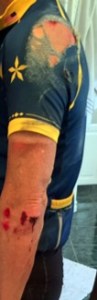
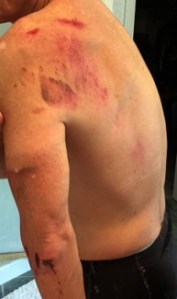
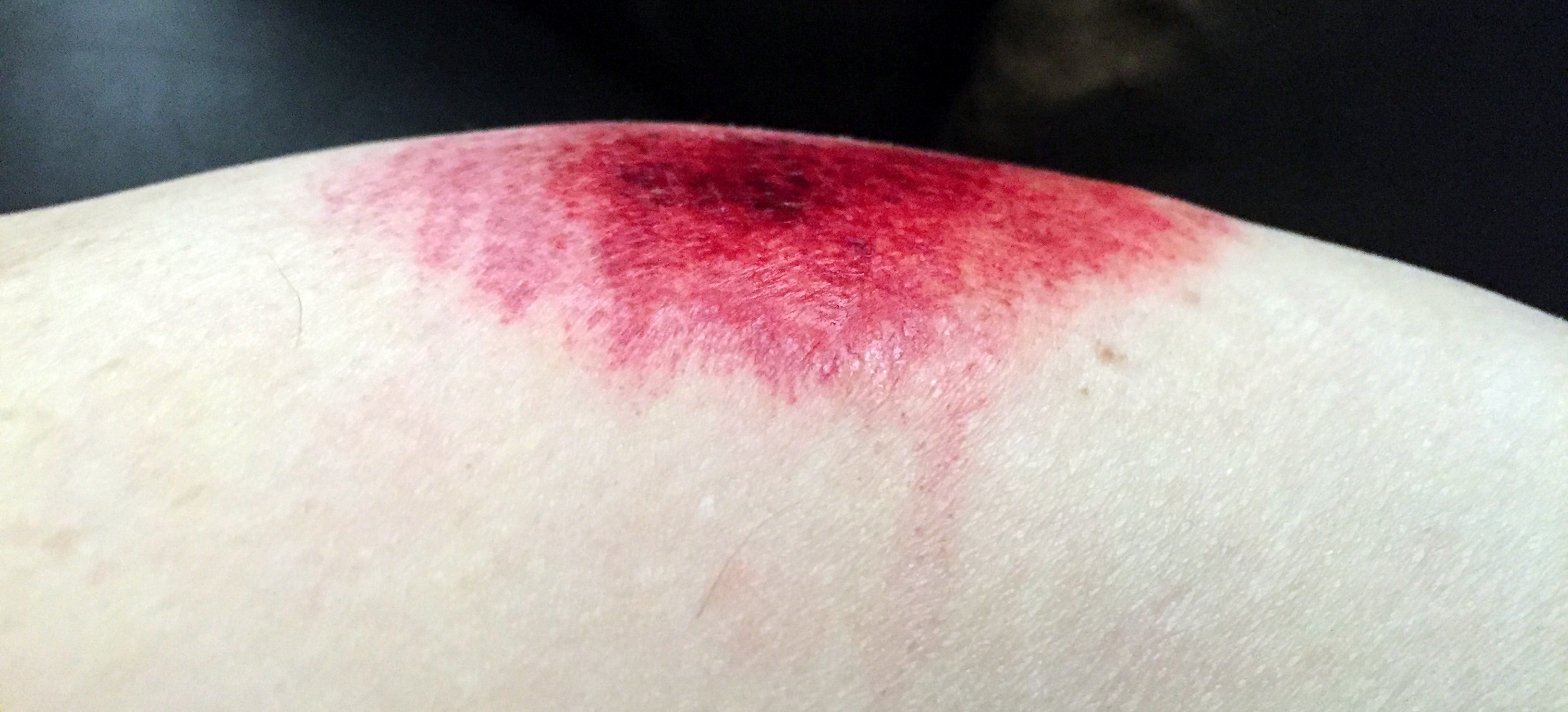
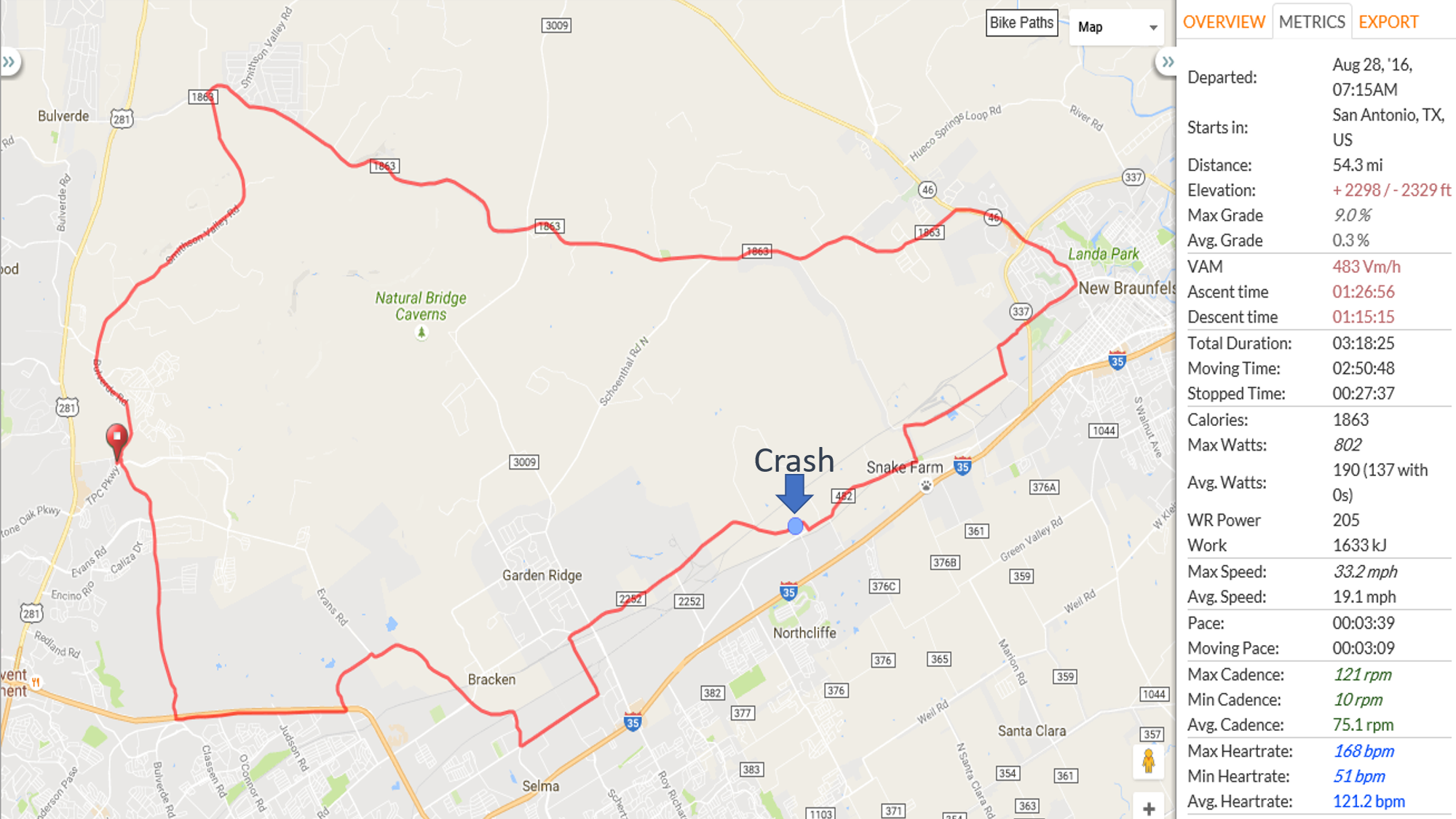
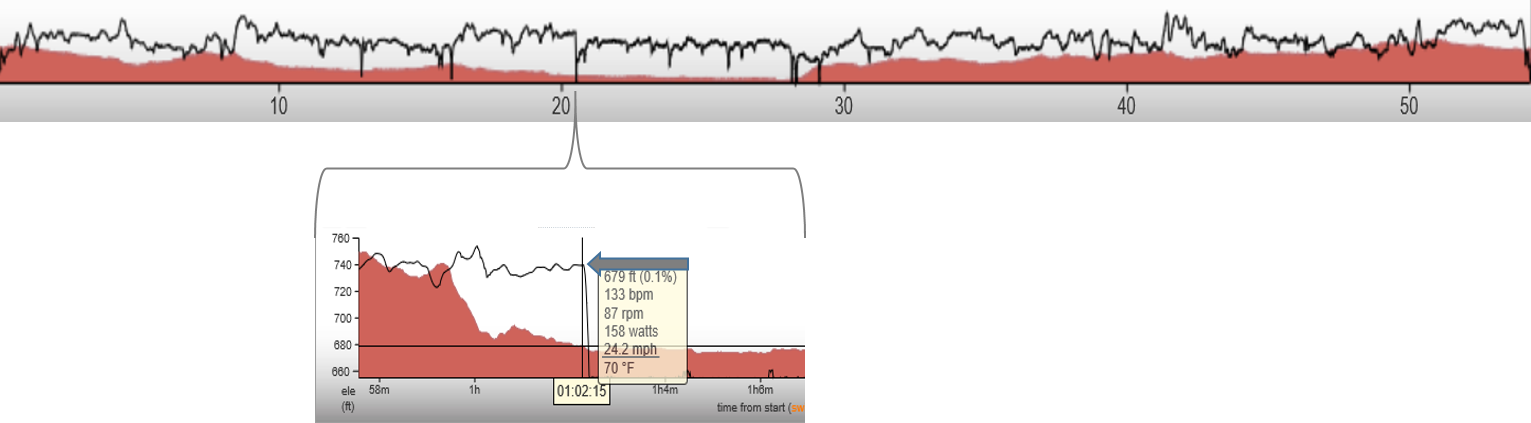
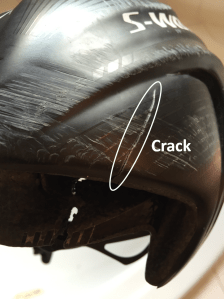 As I rode, my mind returned to the crash. That pothole jolted my entire body, which gave me a real feeling of shock all over my body, and my brain. I held the image of me flying off my bike, feeling totally helpless, hitting the asphalt, bouncing on the asphalt like a deflated basketball, and then sliding while my skin peeled from my body, HURT! That feeling of helplessness gnawed at me. My head hit hard and cracked my helmet. If I hadn’t had my helmet on, my head, too, would be cracked, leaving me either dead or a vegetable. Not a good thought! That feeling of helpless really bothered me as I continued the ride.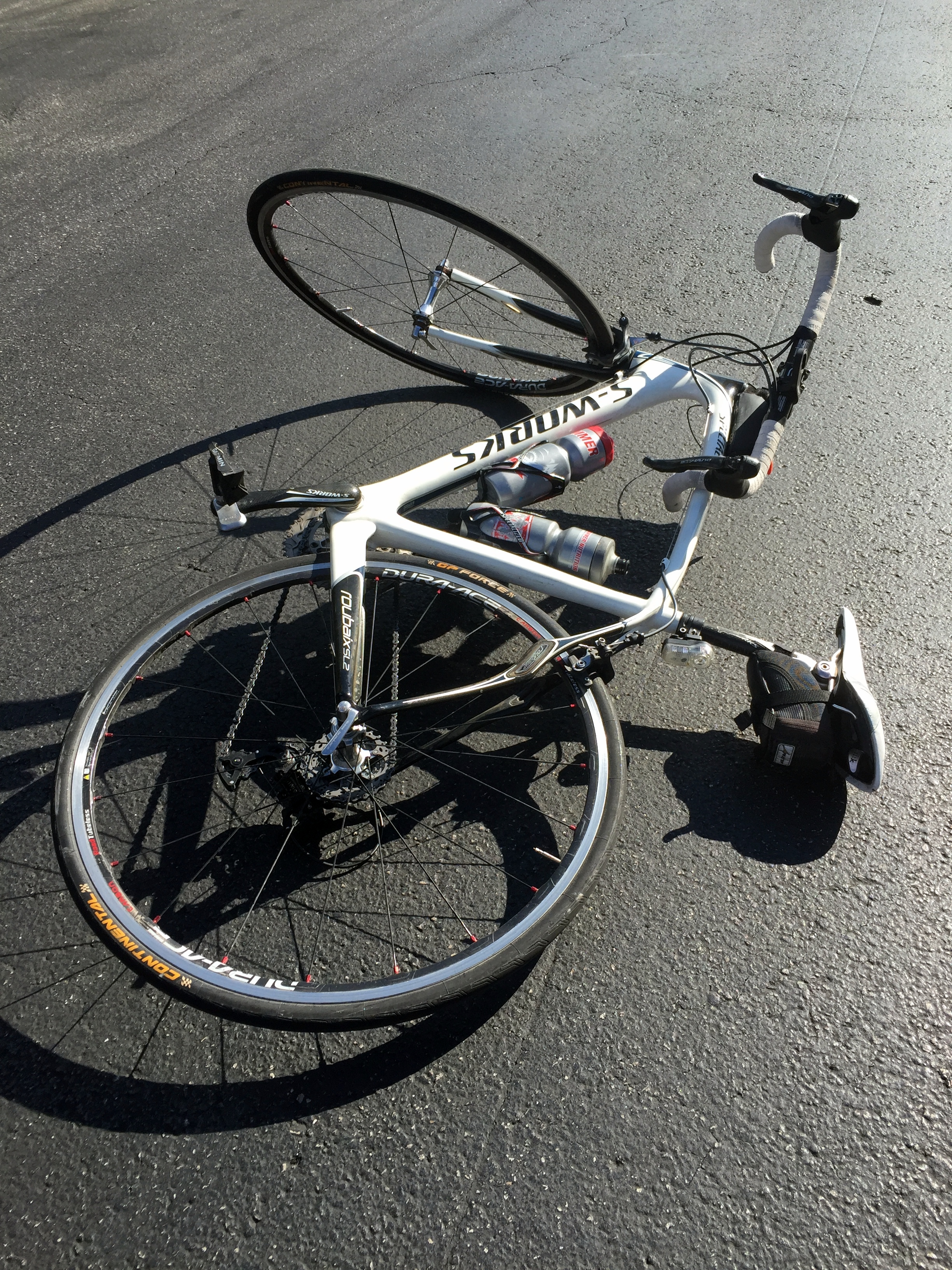
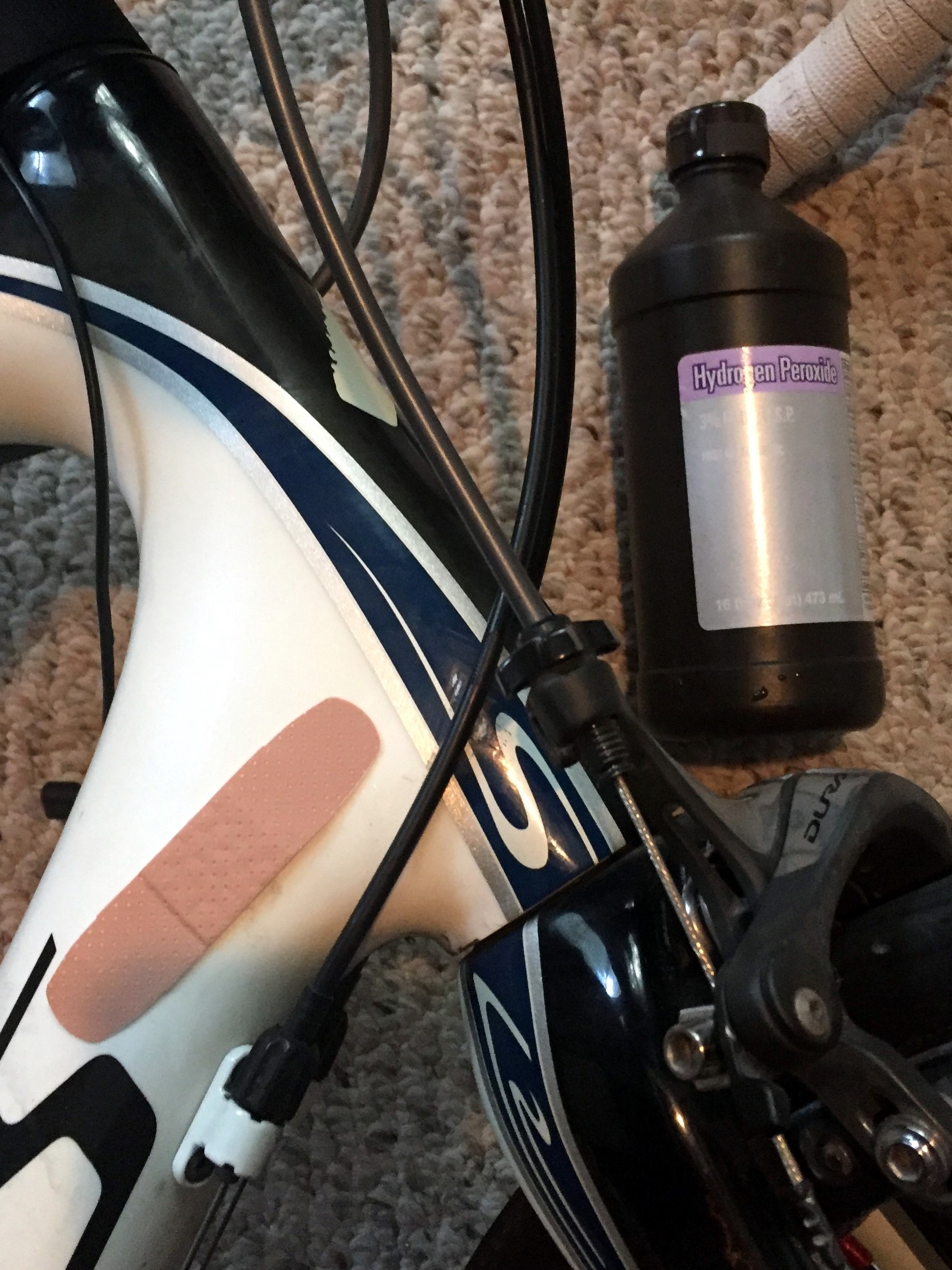 When I got home I looked at my bike and saw the scrape (bike lesion) from the crash. I cleaned it up and
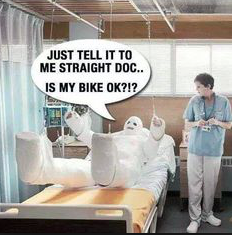 took care of the scrape.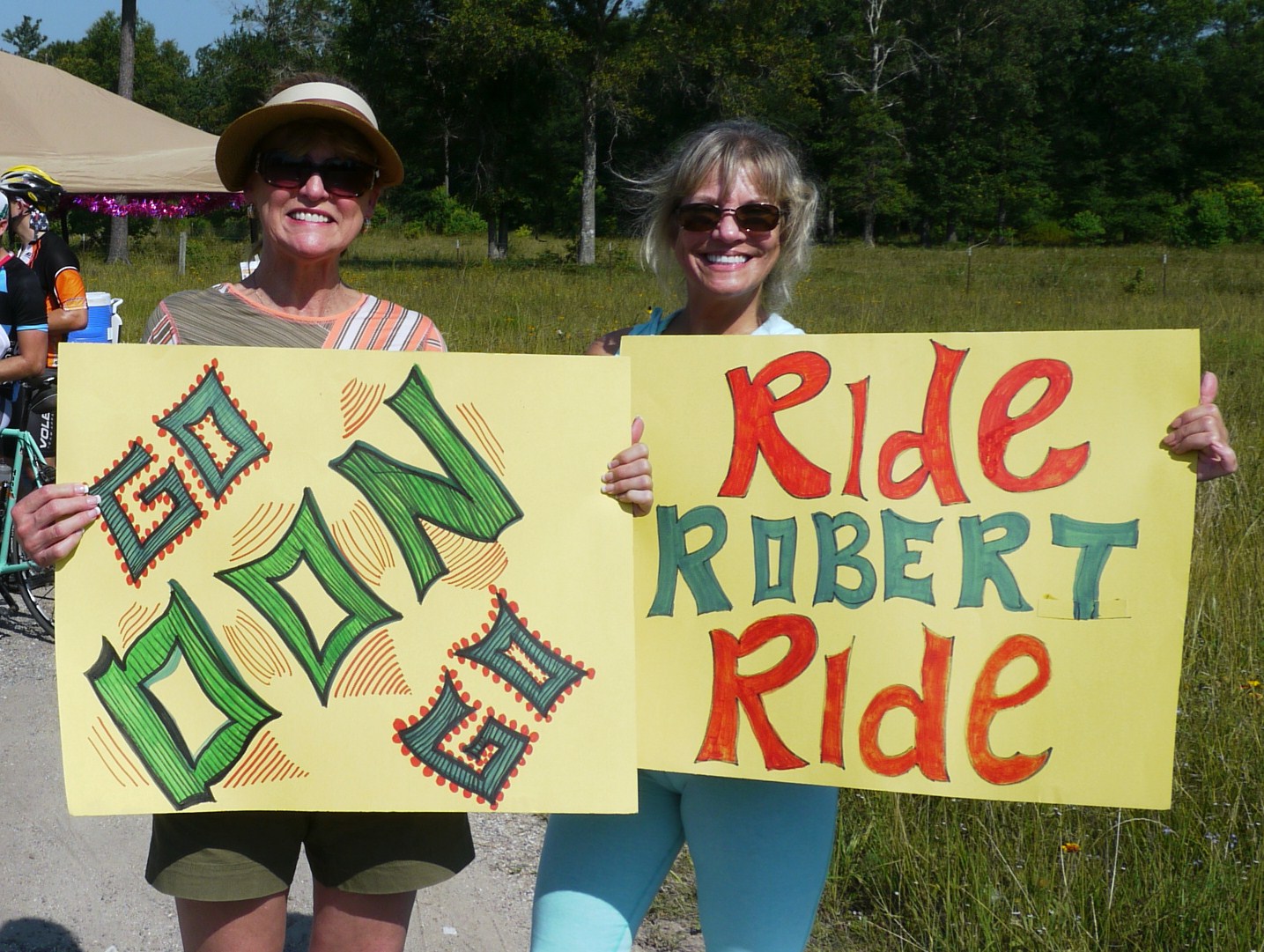
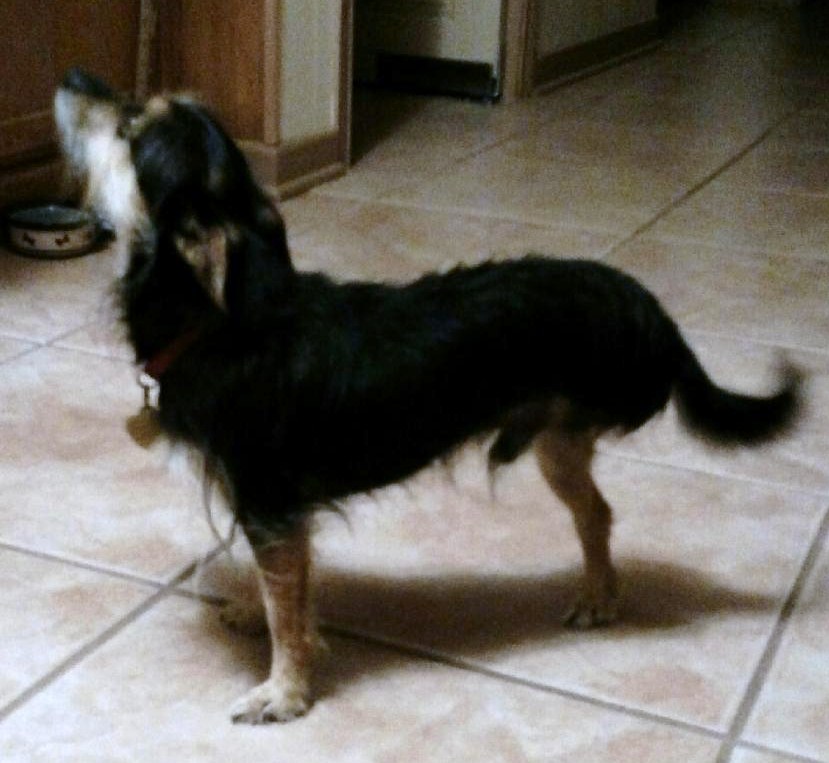

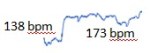 rate stayed consistently above 170bpm. Although I have a normally high heart rate when I ride, sustaining a heart rate above 170 for the next four hours was not going to be easy.

 4 miles into the ride I started heading back up HWY105 now heading west to add on more miles needed to get a true 100 miles. I felt miserable. It was hot with no relief from the sun (no clouds at all). I felt demoralized watching other riders head the other direction towards the finish. It just did not seem right “going the wrong way”. Therefore my average speed slowed down to only 18.8mph.
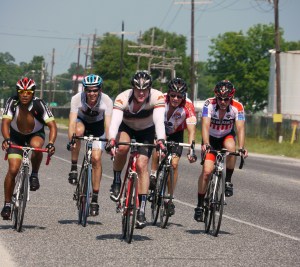

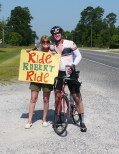 e good new
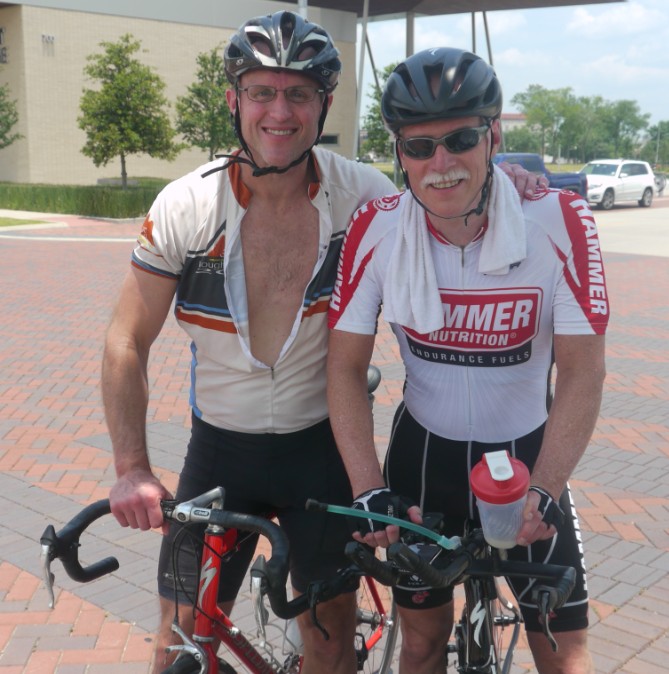
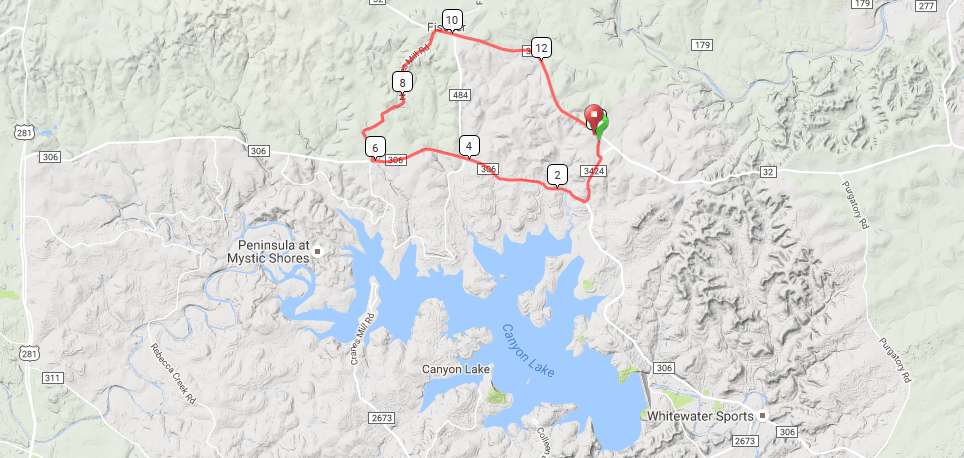


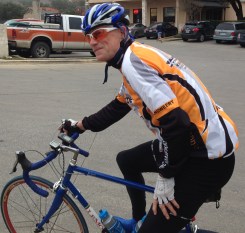
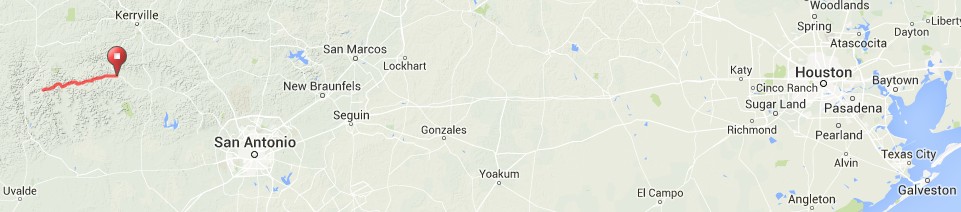
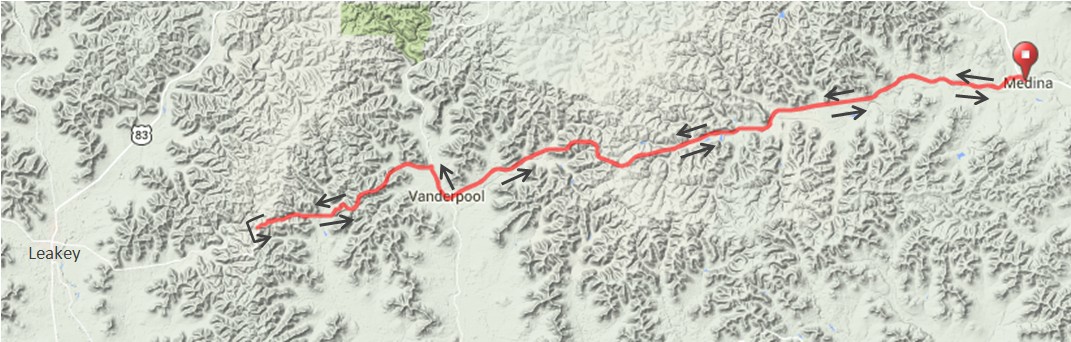






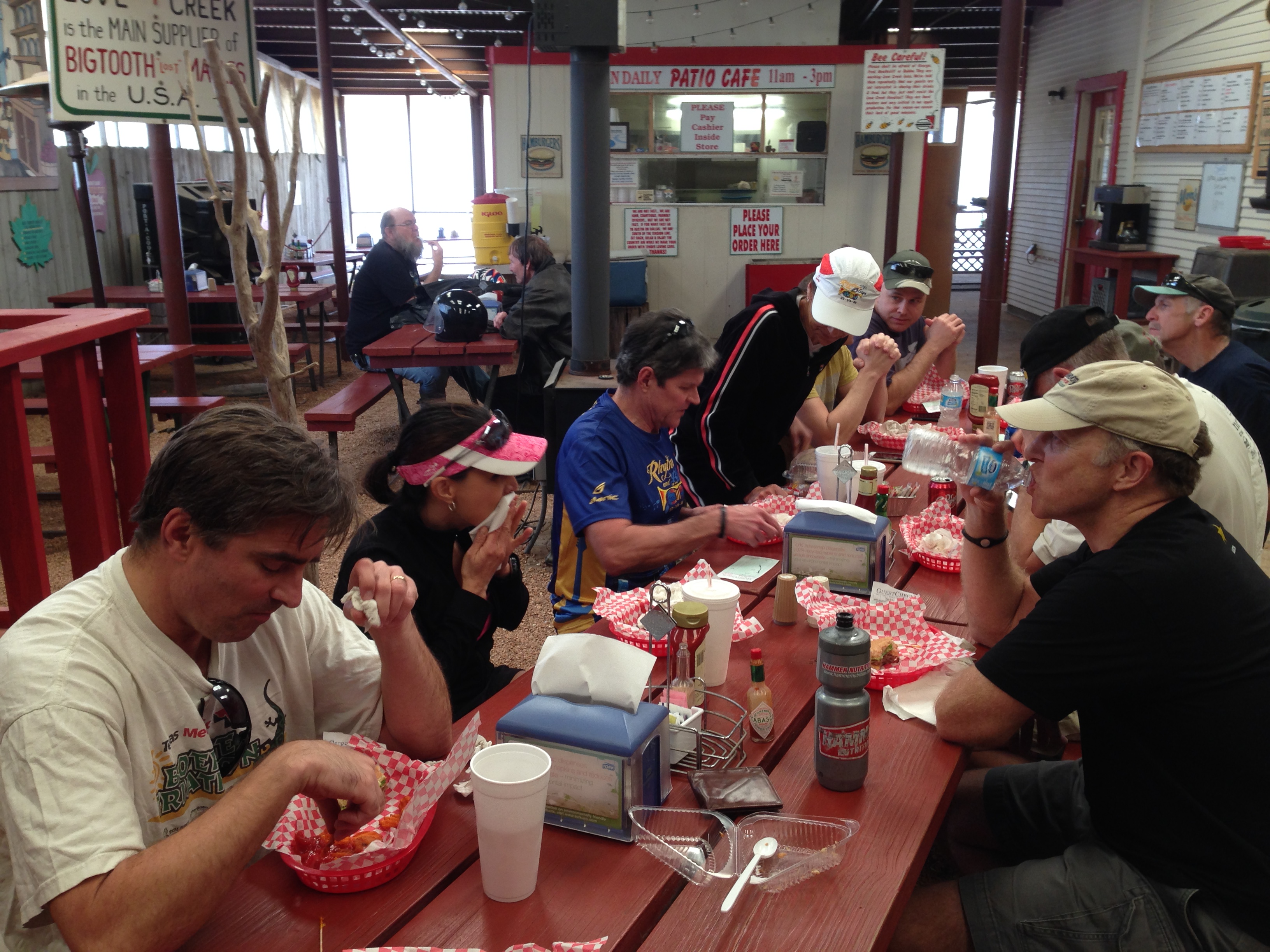
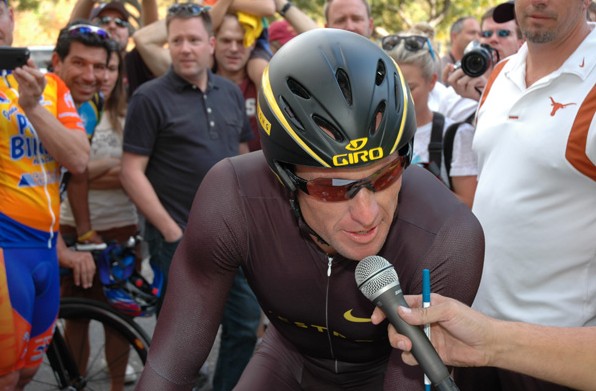
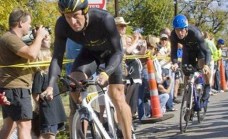
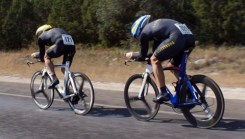
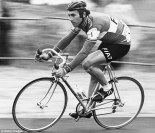
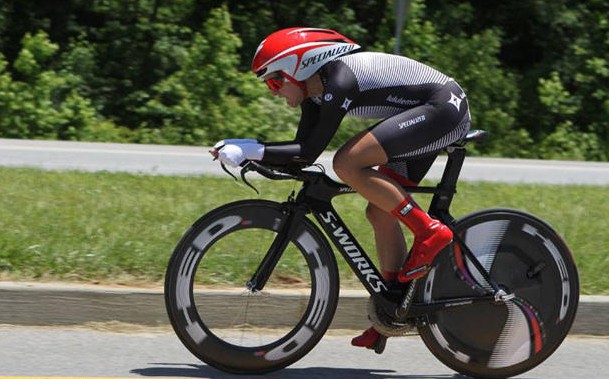

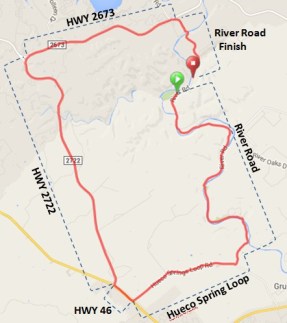
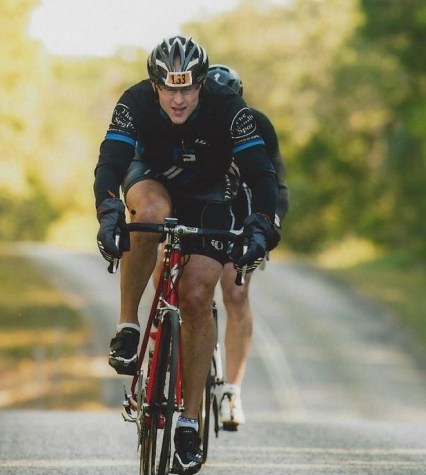
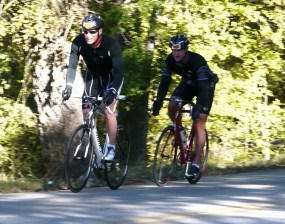
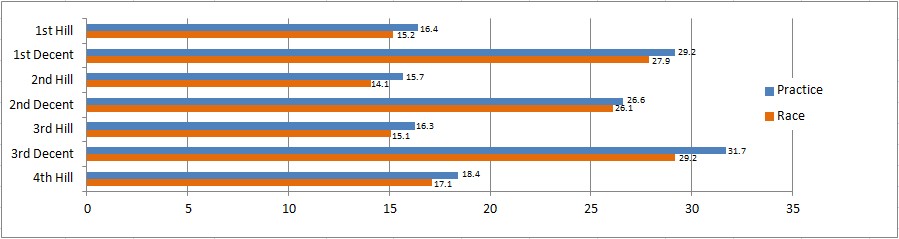
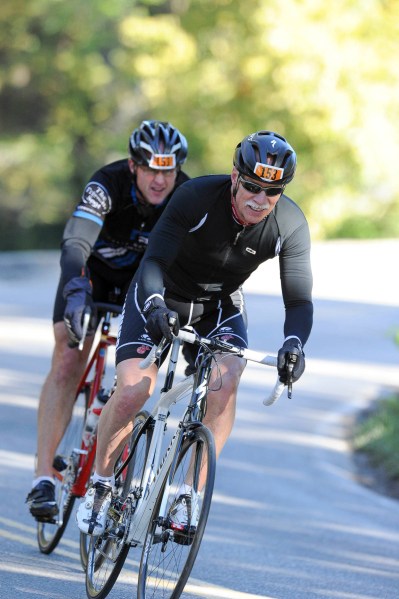
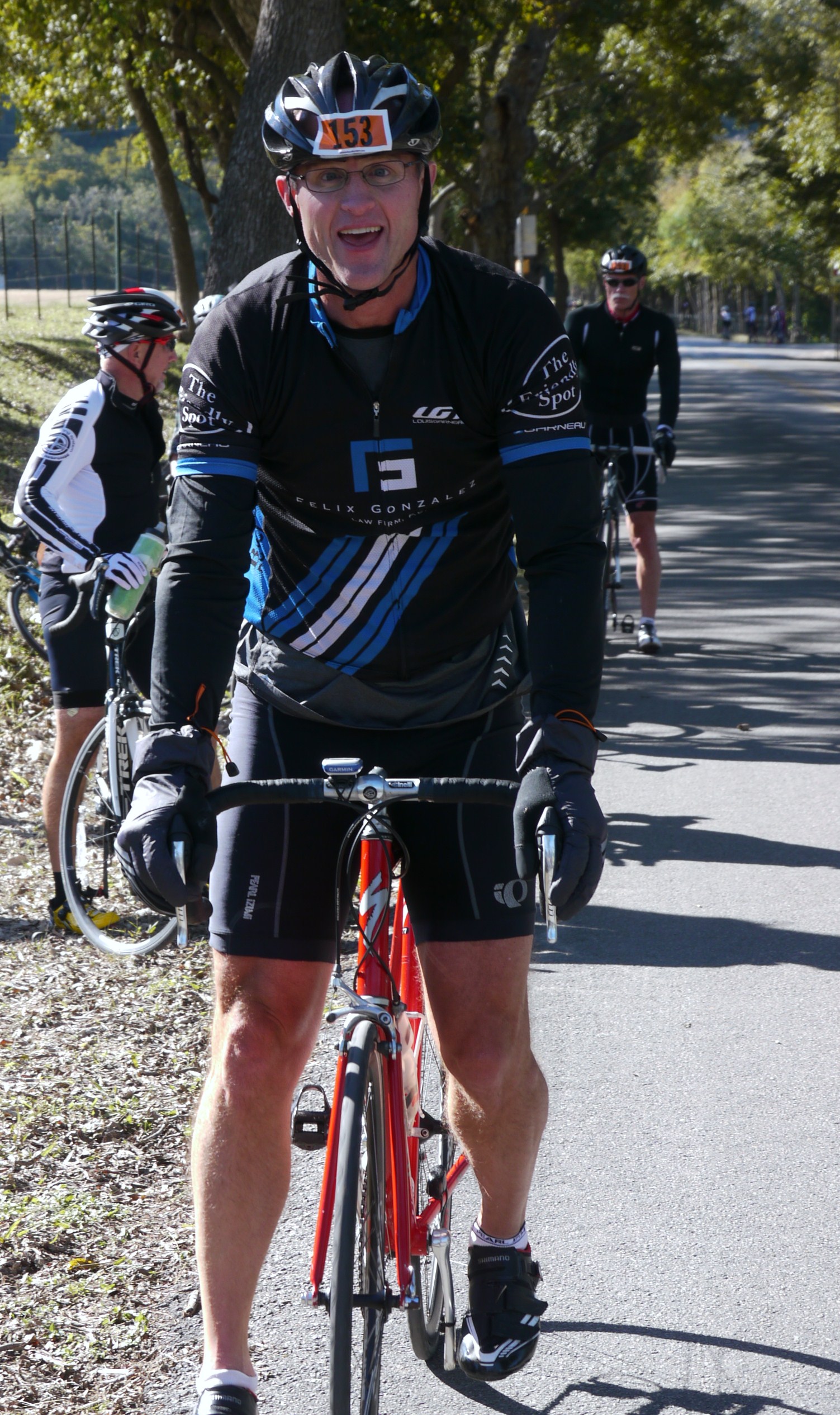
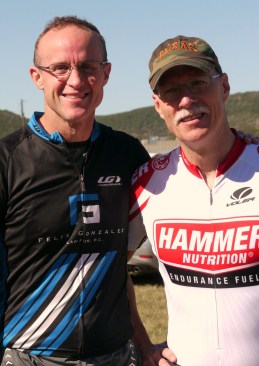
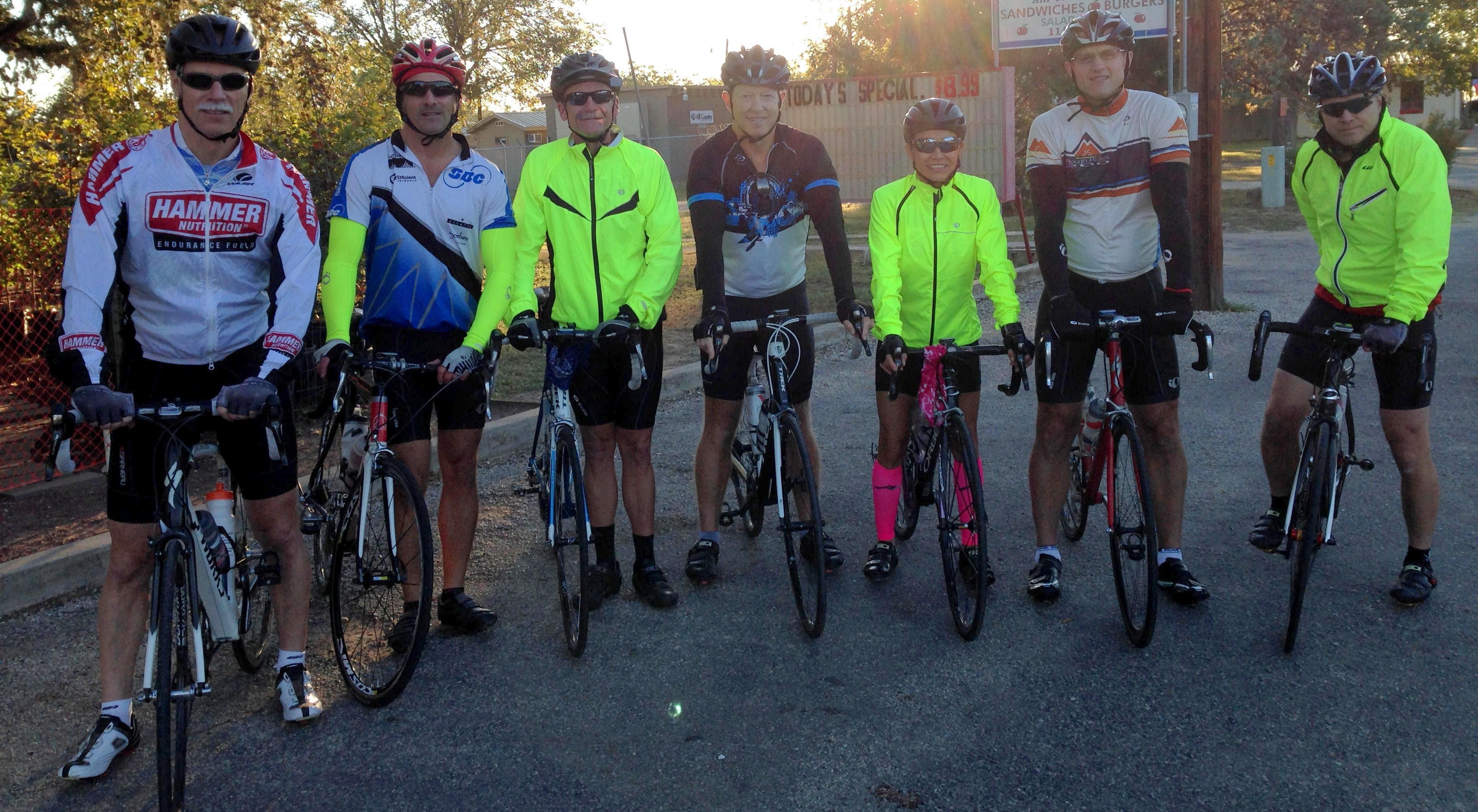

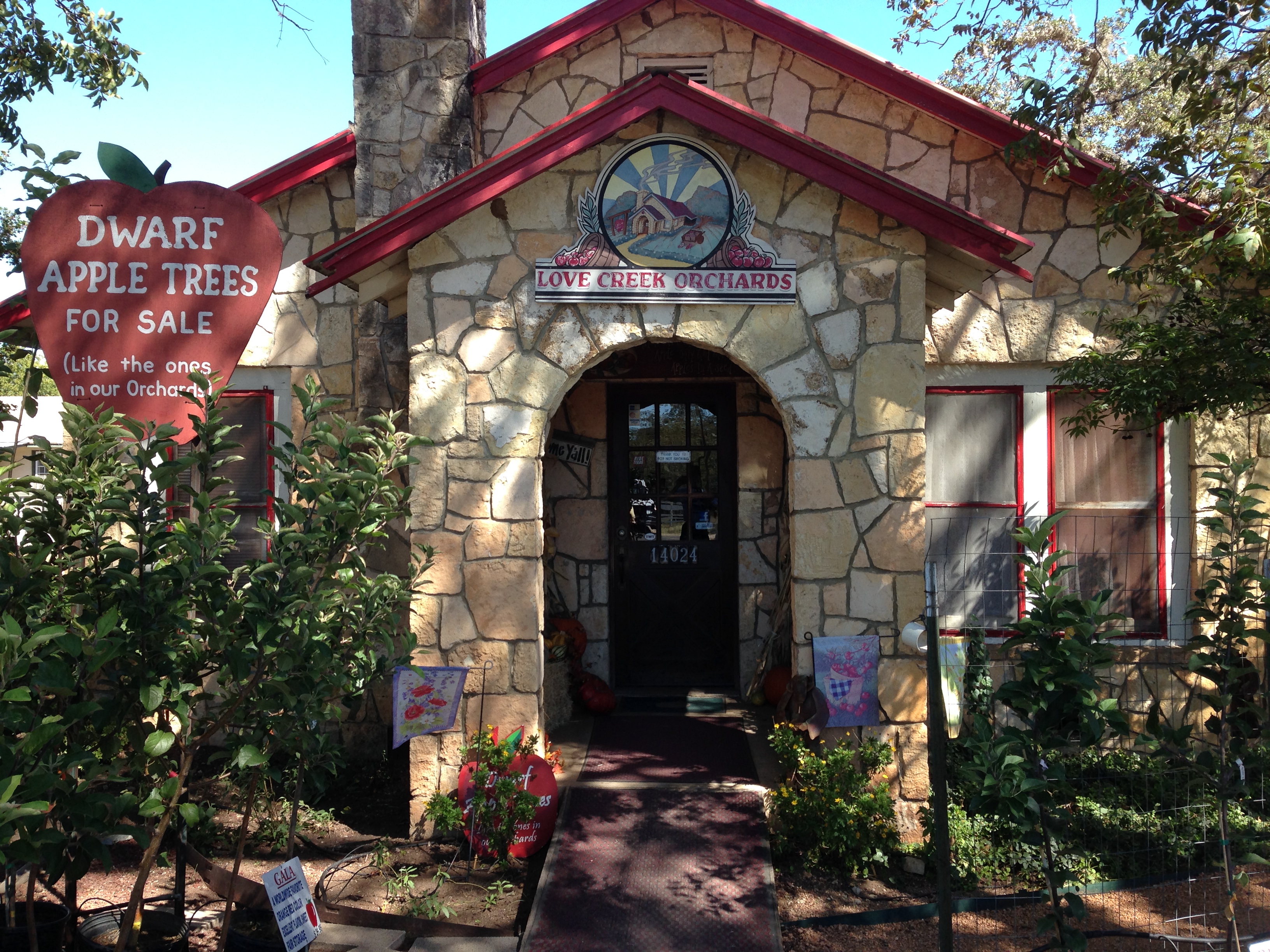
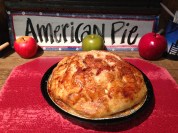 a handful of picnic tables in between. Different! As we sat down to eat our delicious hamburgers on homemade bread, I kept hearing about their apples. With their own apple orchard they make all kinds of homemade dishes, like Apple Pie — the tallest, deepest dish apple pie that I have ever seen, and oh so good!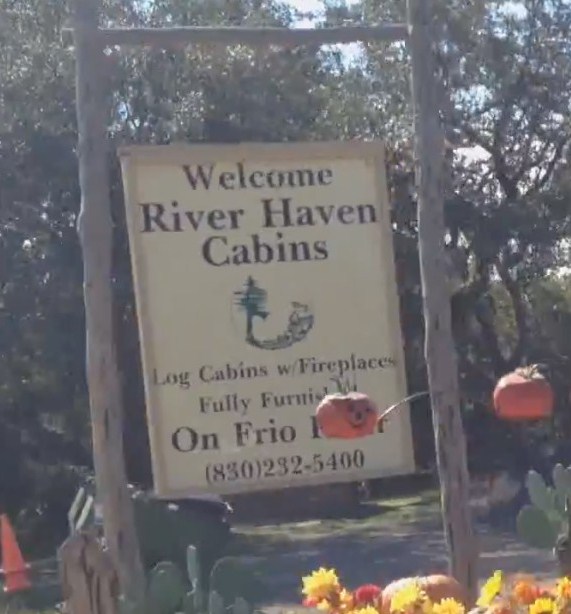
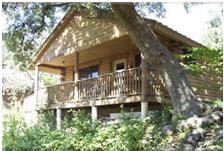
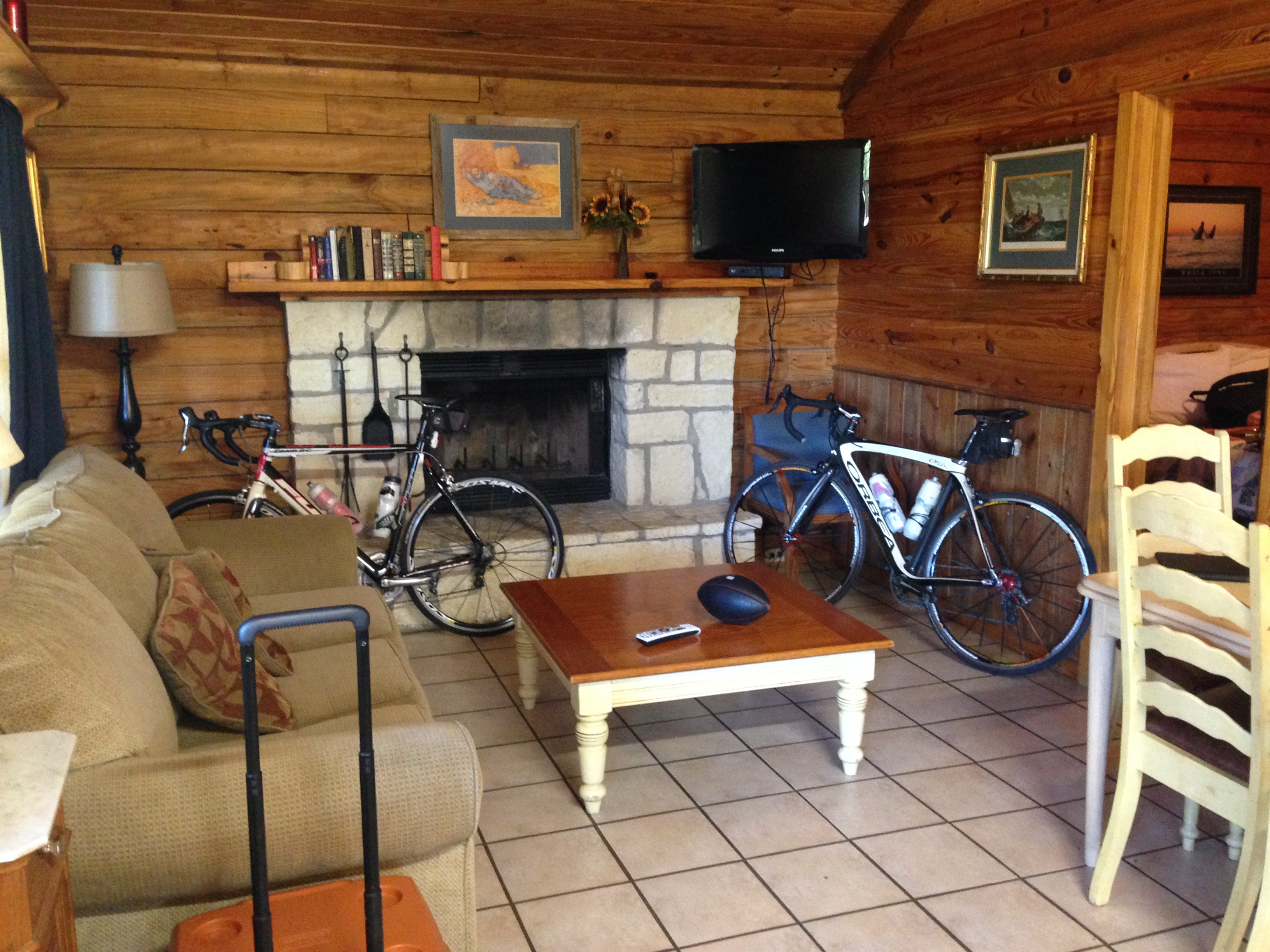
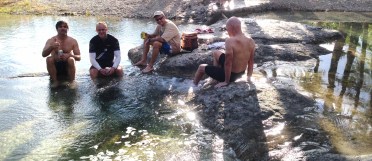 River and got into “Peter’s Hole.” That’s right, I said “Peter’s Hole.” In the middle of the Frio River, just after the water swiftly flows over a series of rocks, Peter discovered a deep spot in rides past, dubbed “Peter’s Hole.” It’s the perfect place to soak the legs and body after a long ride, drink beer and tell stories that I can’t repeat here. It has become one of the traditions of the Death Ride.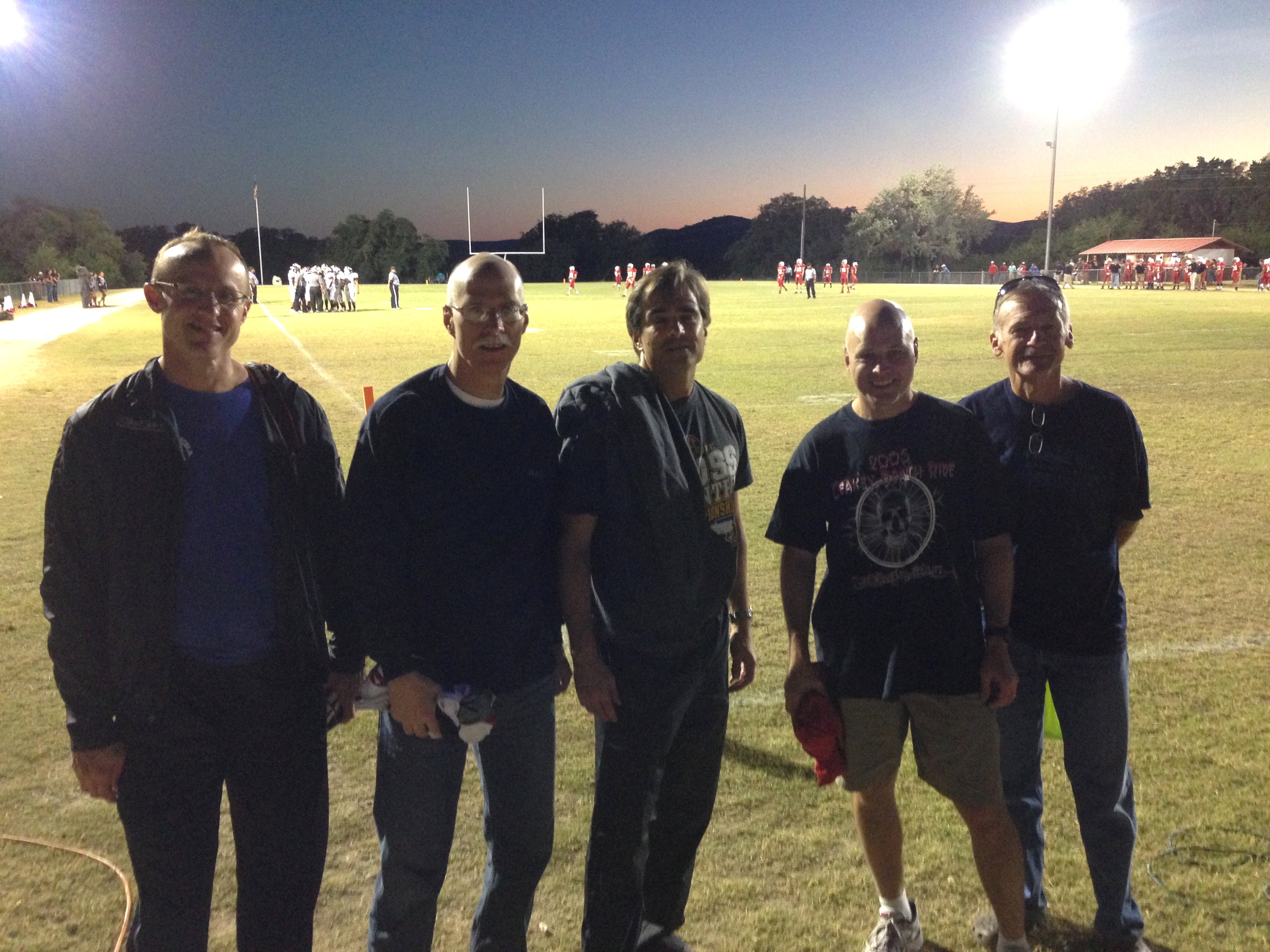
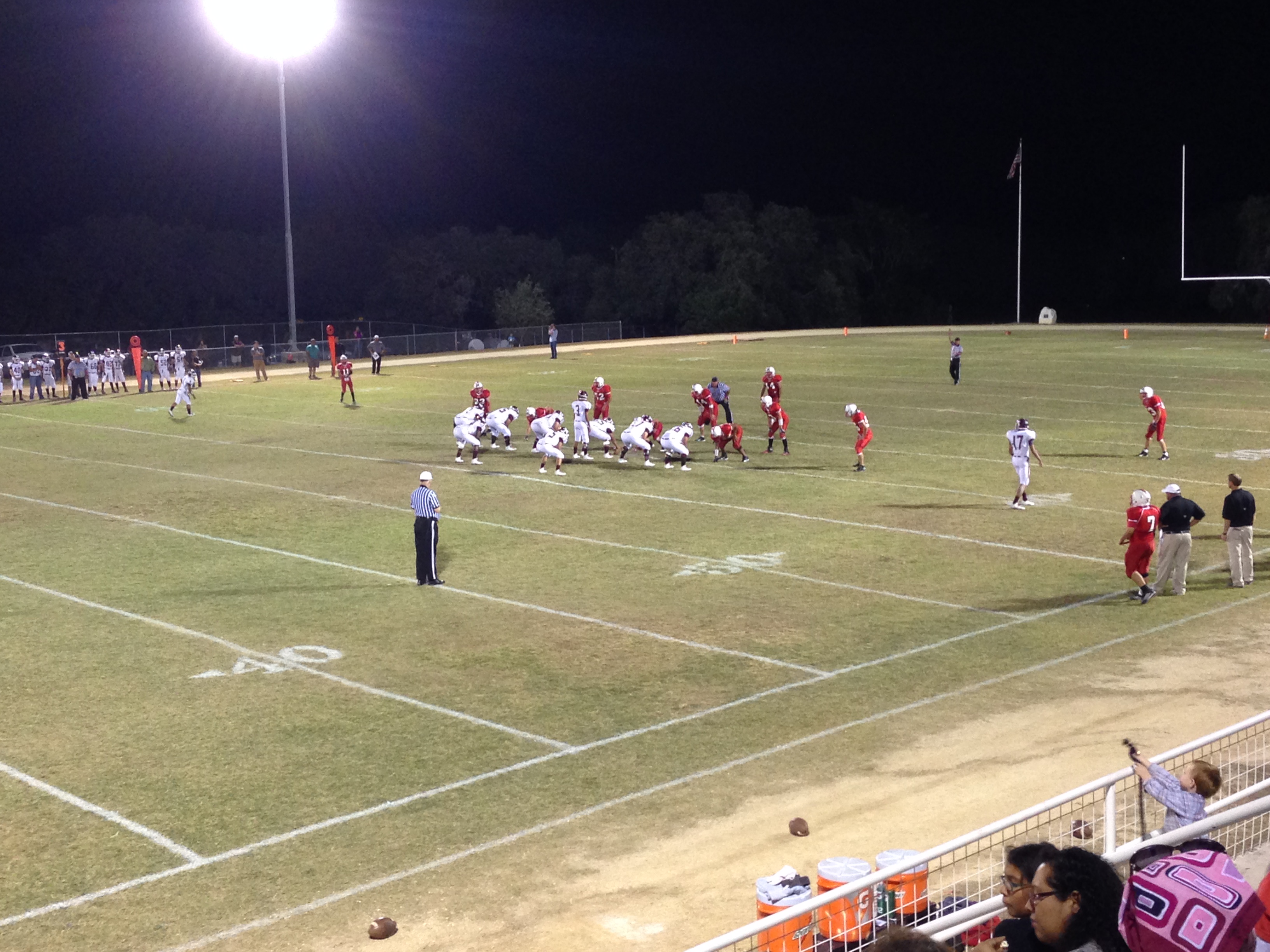
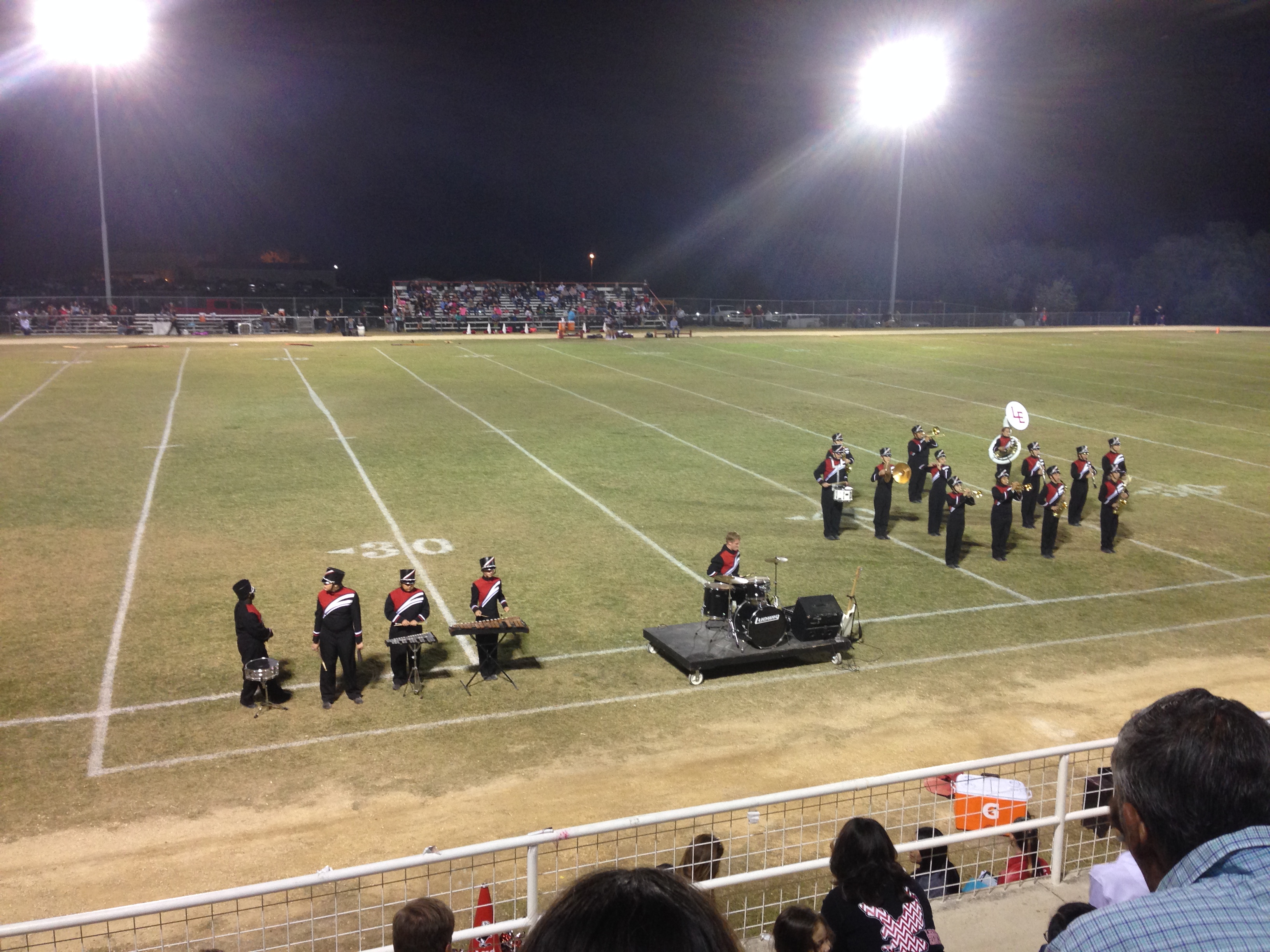
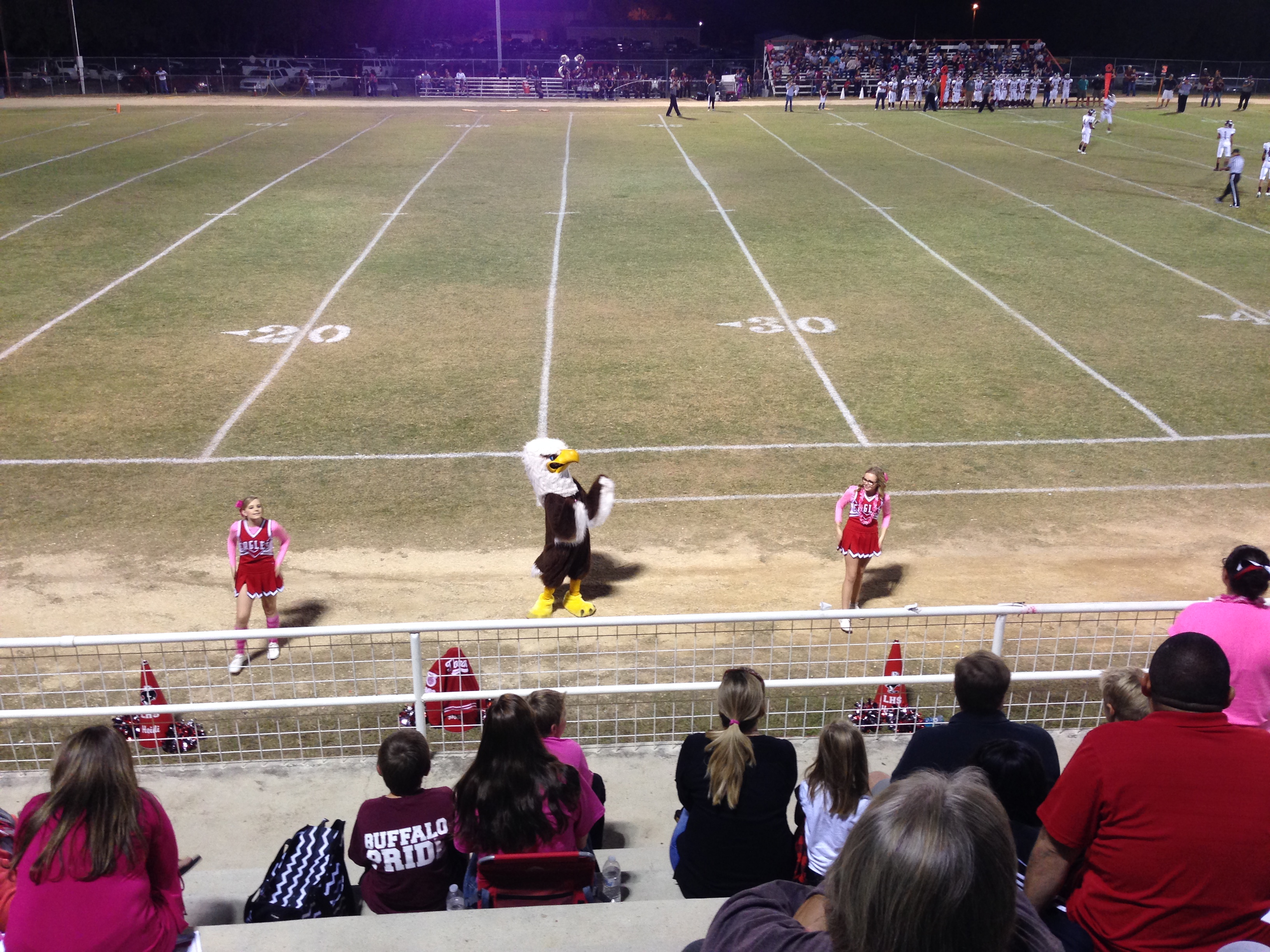

 r chilly morning, we awoke to a mild 60 degrees with clouds and a bit of humidity for our long ride for the weekend (102 miles). Joining up with the official ride event, we began our quest to find the elusive, but valuable AFD Kit; more on that later. We got started a few minutes late, so we were well behind the larger group of 50 plus riders (they started riding in Leakey and we started from the lodge located at least three miles outside Leakey).
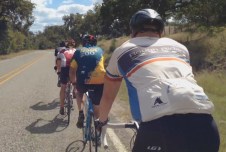 north on 336, relatively flat terrain with Bert and Robert trading the pace line lead, averaging 20 mph for the next six miles.
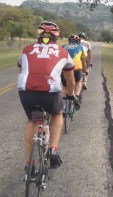 left before we finished filling our water bottles but we took off and began picking them off one by one. We passed two older ladies dressed in nice color-coordinated jerseys that we ended up passing several times through the remainder of the weekend. This occurred as we frequently stopped for whatever reason; they consistently rode at a steady pace. The truth is I am more likely older than the ladies but I like to think of myself as still young.

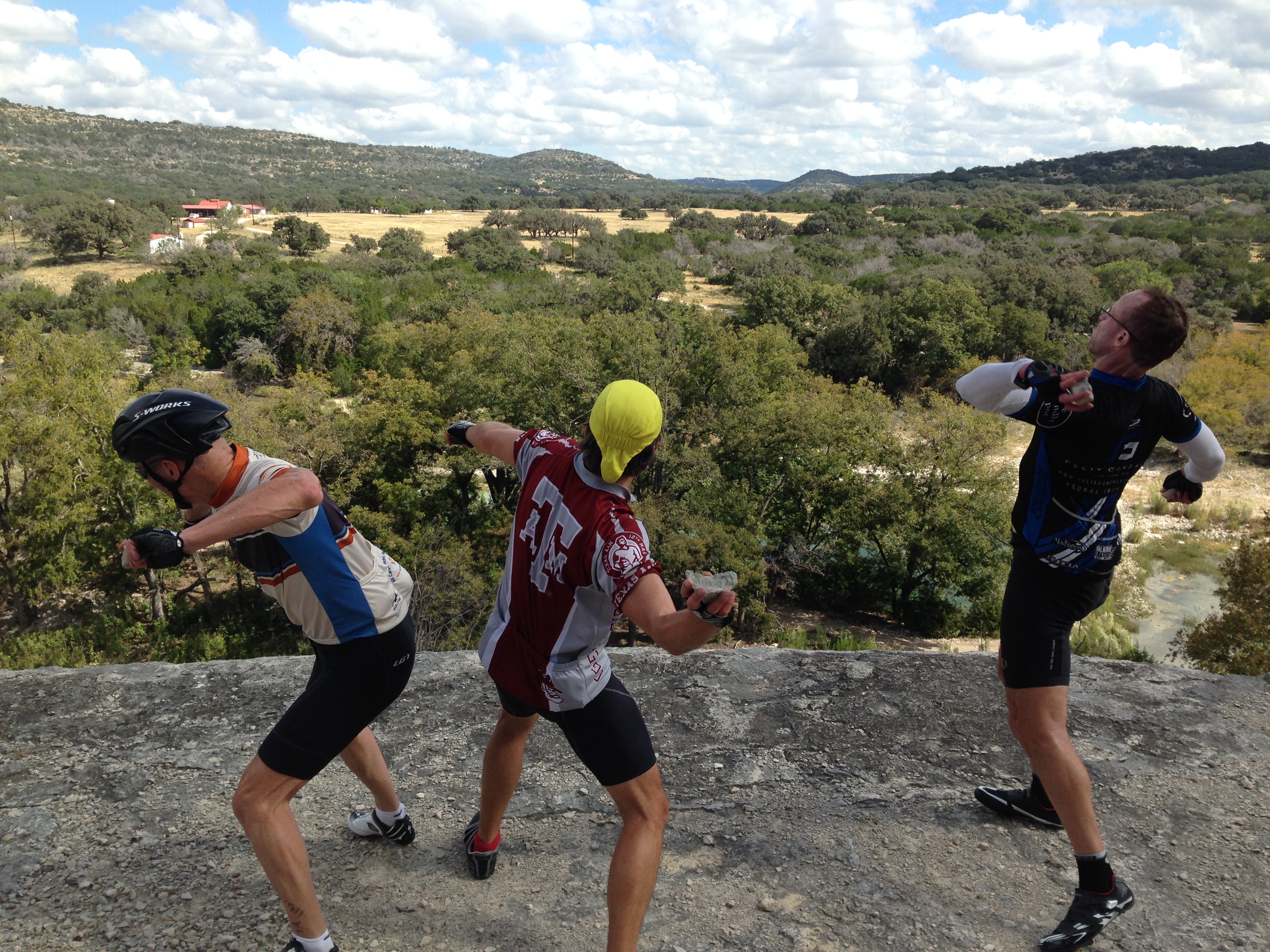
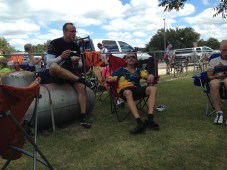
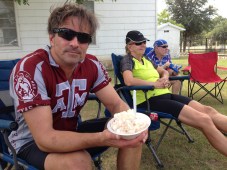
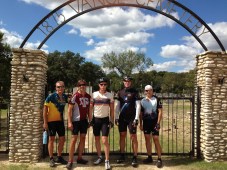
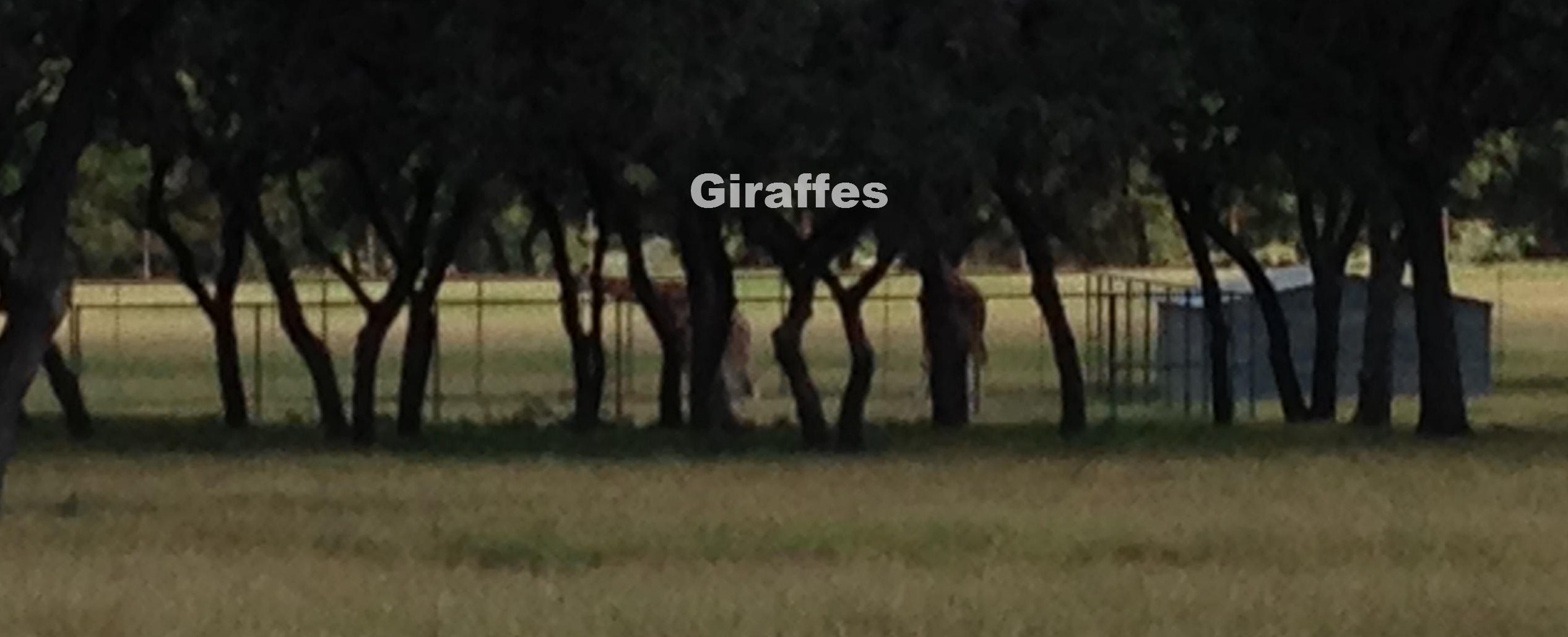
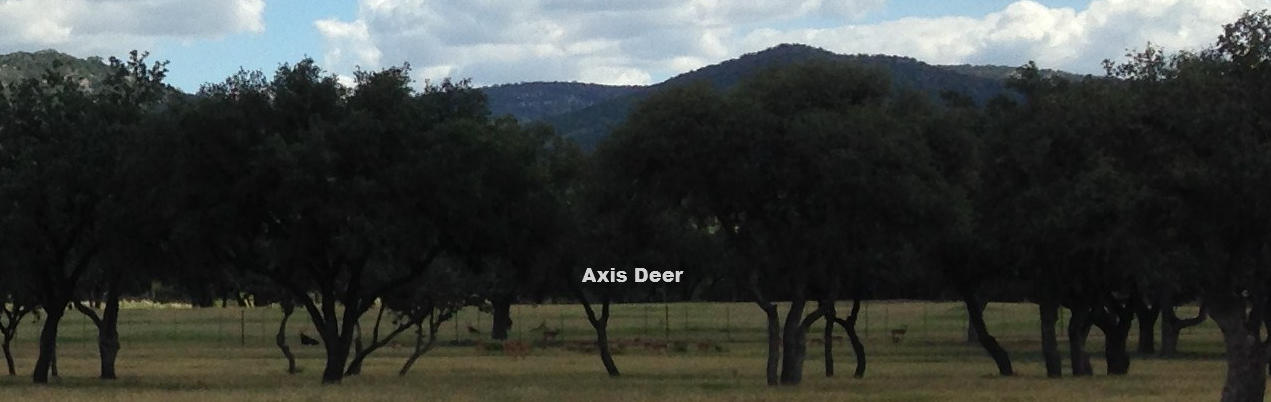
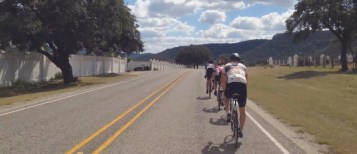
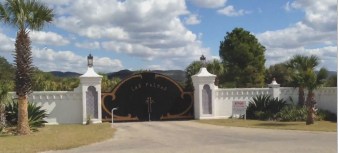
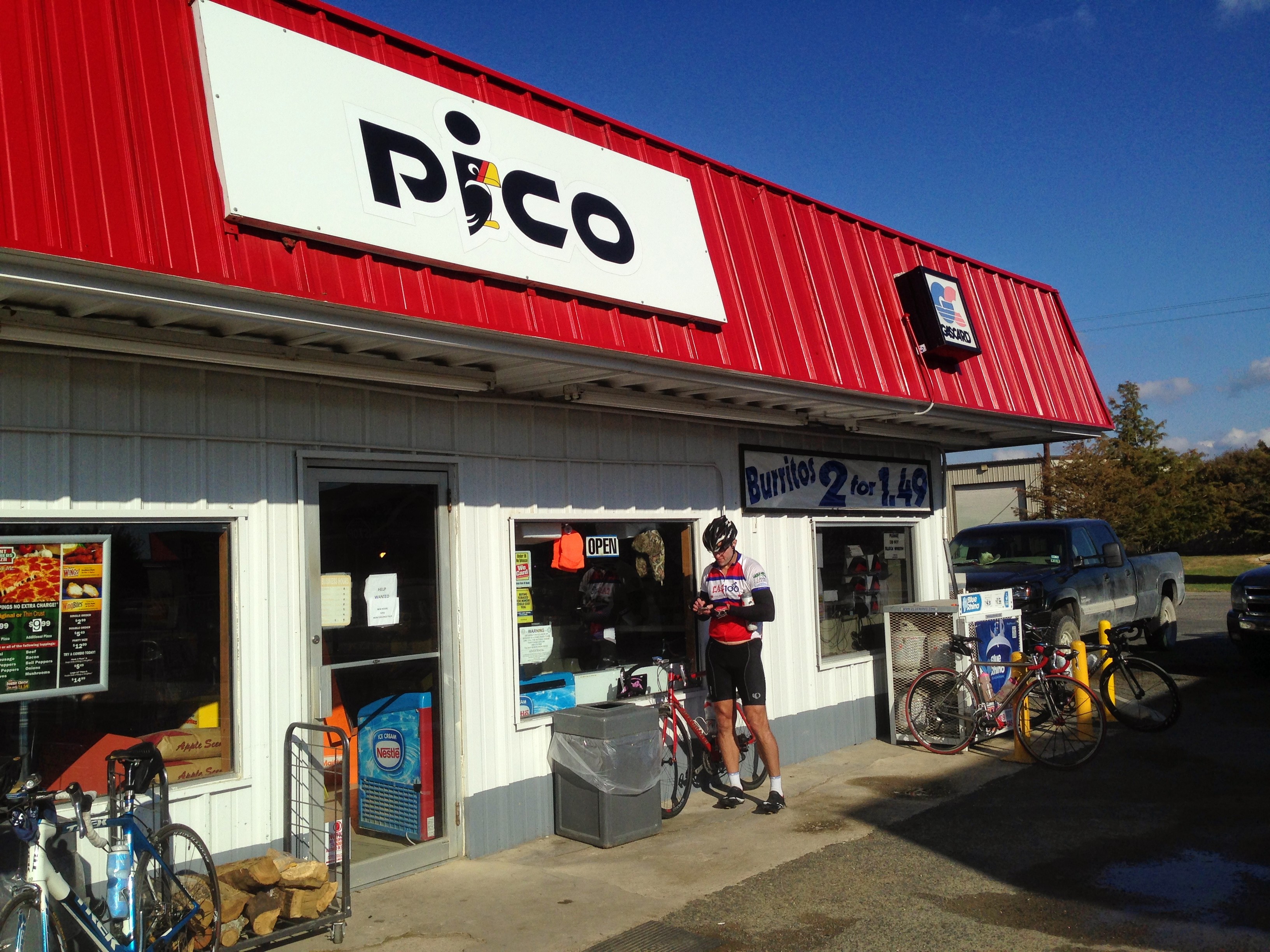
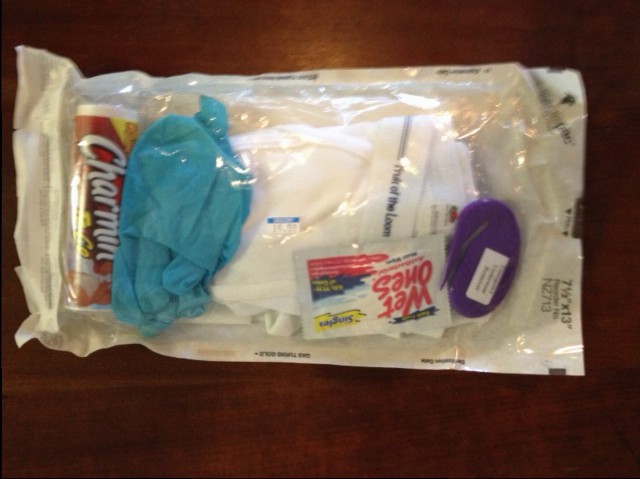
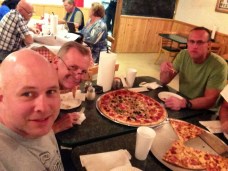

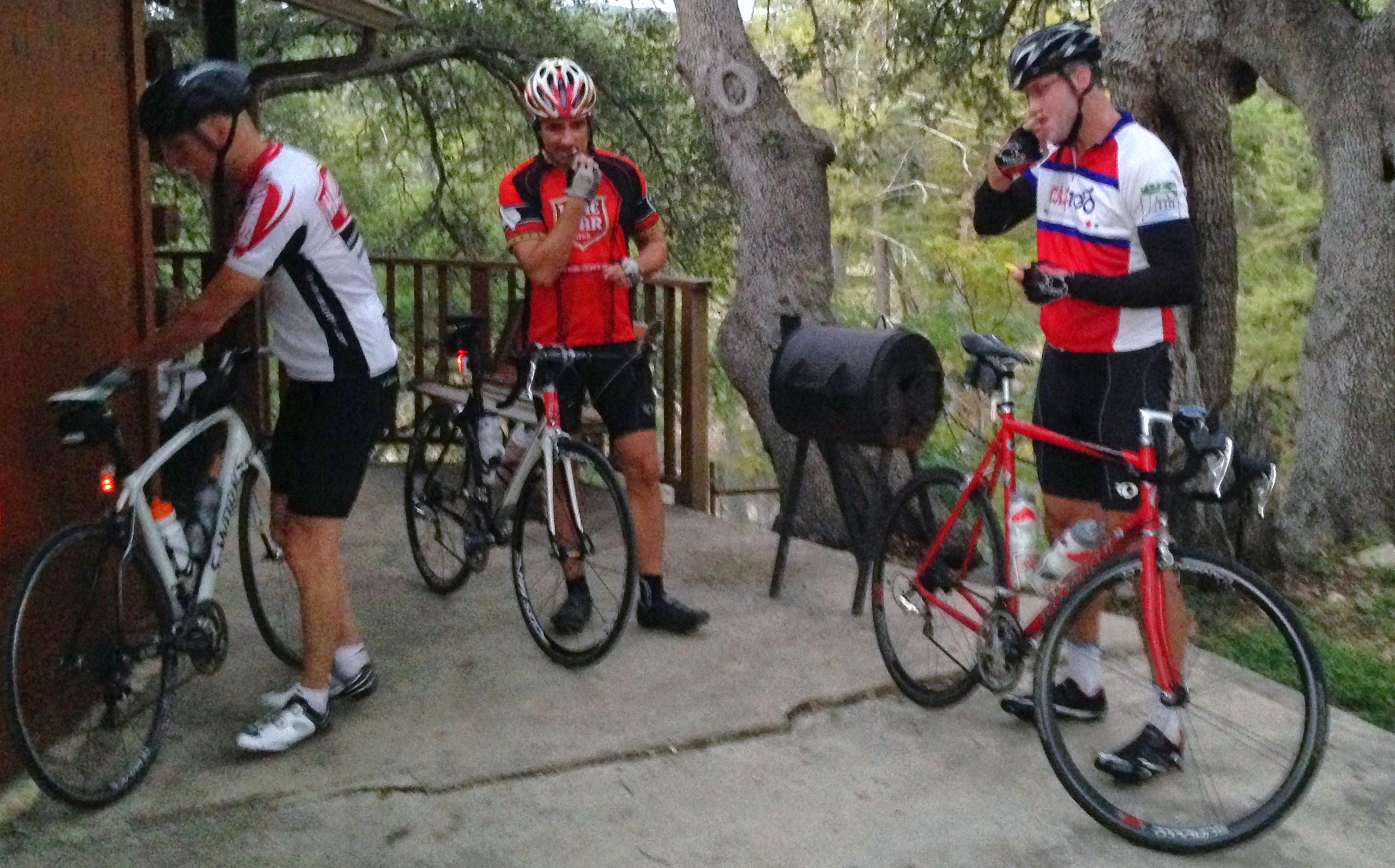
 s immediately followed by another 1.9 mile CAT 3 climb averaging 6.1% incline (9.6% max). Tired, but still alive, we began a super fun downhill decent hitting speeds up to 37 mph. We would have gone a little faster but caution prevailed as the wet road had us hitting the brakes a lot. We stopped at the Vanderpool corner store (18-mile mark) to fill up the water bottles. The two ladies we passed earlier came in a few minutes later and quickly took off to continue the ride. We too, headed out going south on Hwy 187. The road remained flat for 12 miles to the city of Utopia. With a fairly strong head wind to battle, we formed another pace line with each of us pulling for a few minutes and handing off to the next rider in line. In spite of the wind, we hit a good speed, averag
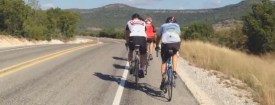 ing 19 mph (max 27 mph). That helped us quickly catch the “steady as you go” ladies. They tried to join our pace line but when Robert led us swiftly over a small hill, they could not keep up.
 s stem was
 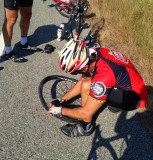 too short. We all gathered around to makes jokes about Bert’s short stem. So Robert gave him his spare tube with the longer stem and we quickly got back on the road. Bert was not the only one with mechanical problems. Peter was plagued throughout the weekend with problems on his rear hub causing him to have to constantly peddle (even on down hills) to prevent the hub from making a noise and worsening the problem. Even Robert had his gears stick on a couple of occasions. My gears were sticking a bit too. Fortunately, none of us had problems sever enough to prevent us from finishing.
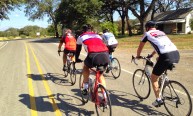 the easy 6.5-mile ride back to the lodge. I noticed on that last little hill my legs started to wear out. I don’t think I would have done well if we had come upon another big climb. Fortunately we had an easy ride back to the lodge averaging 17 mph (hitting 30 mph max).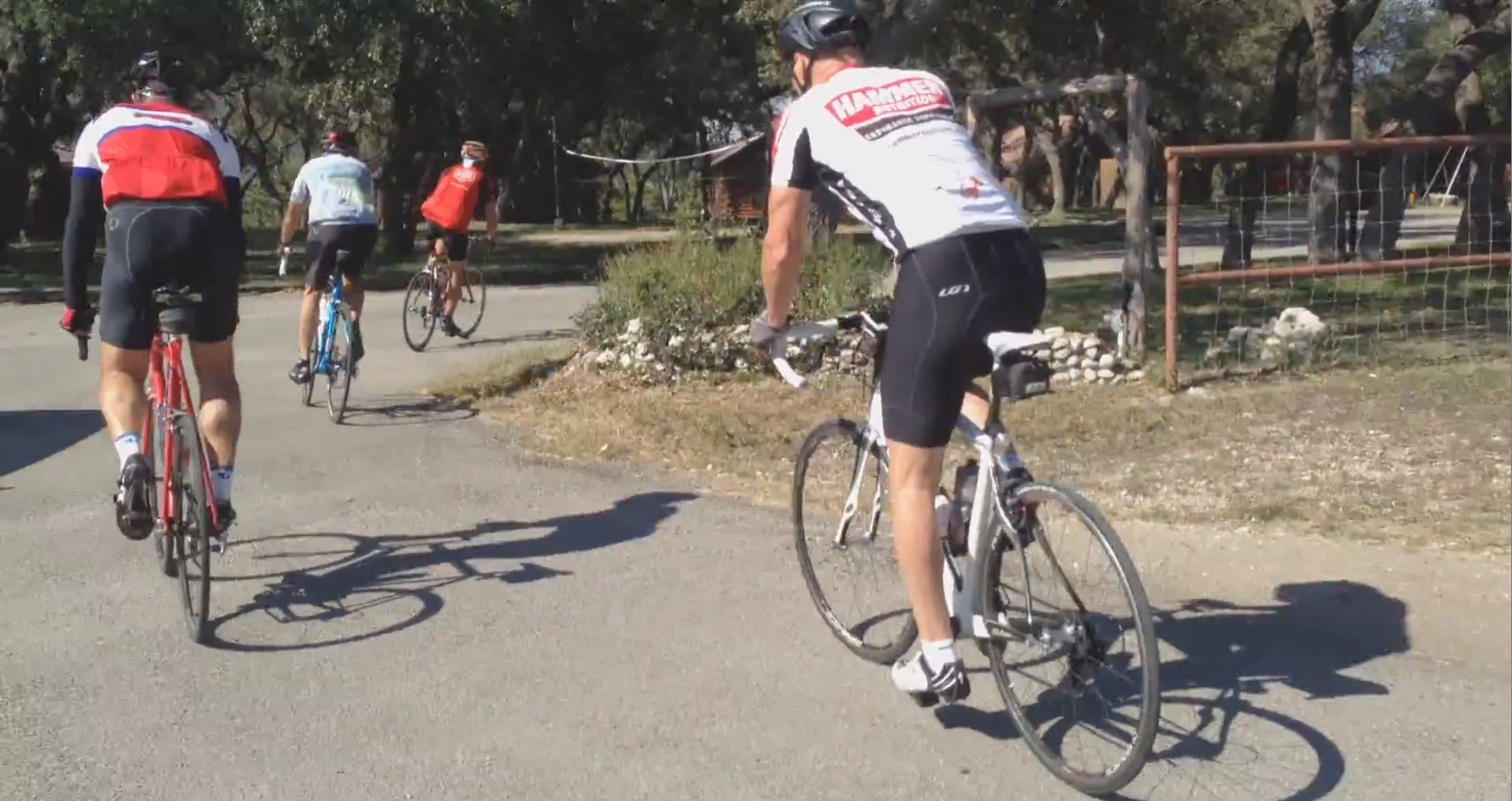
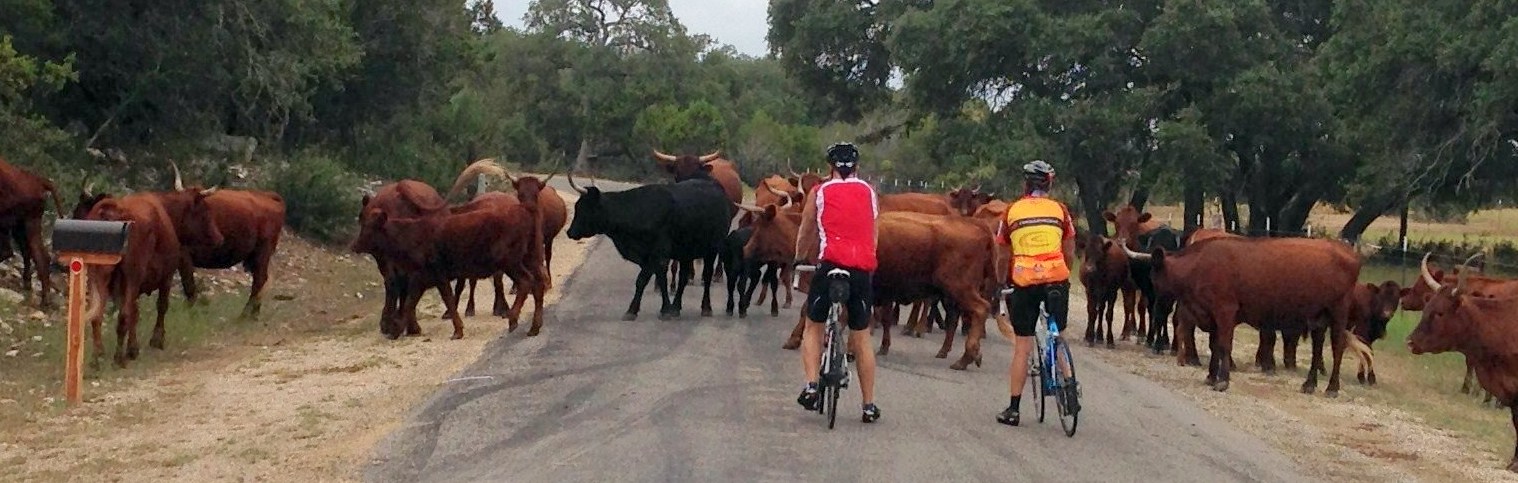
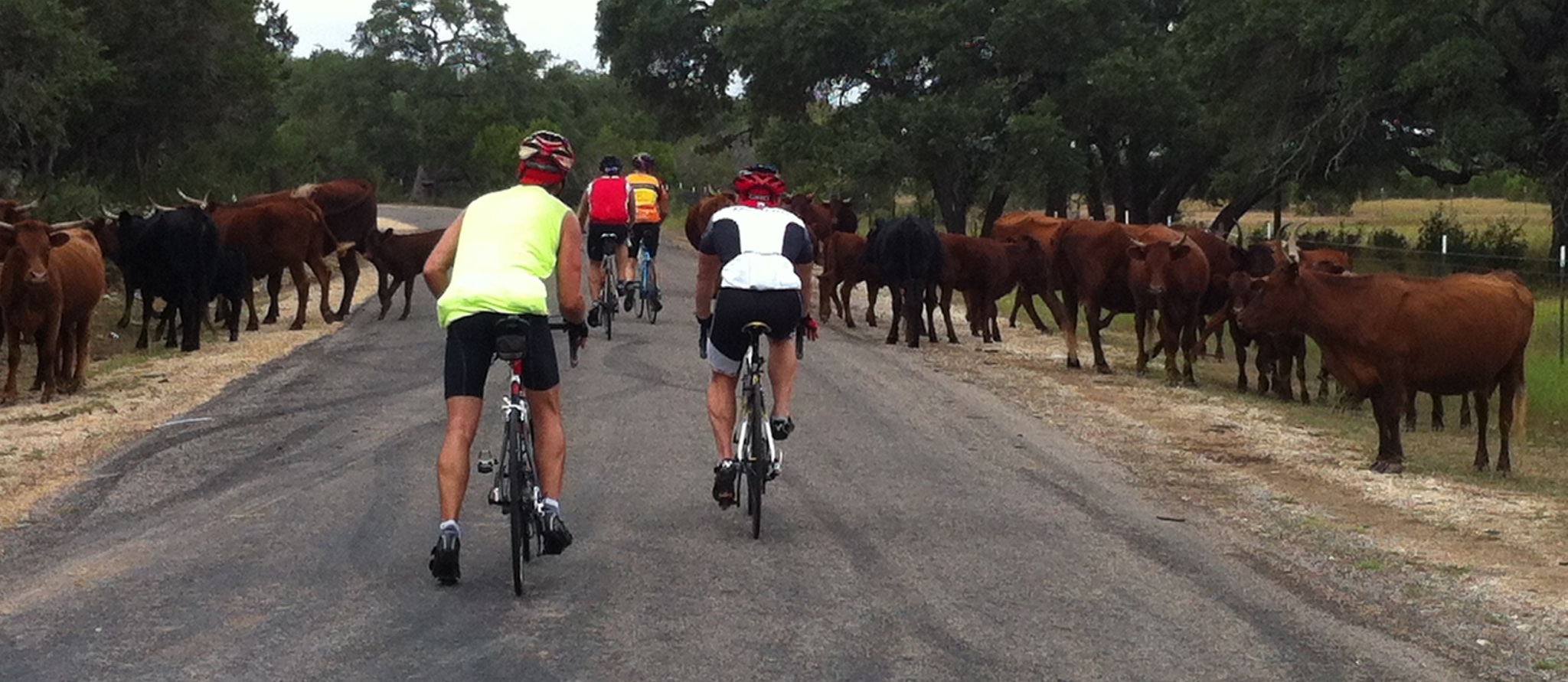
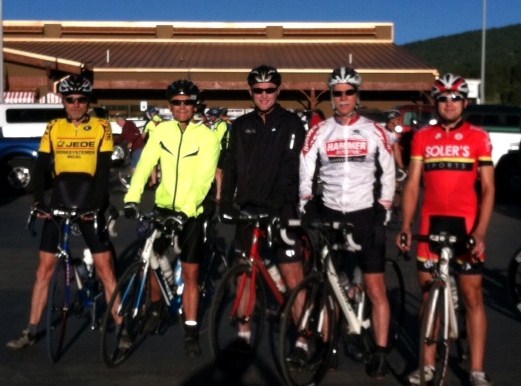

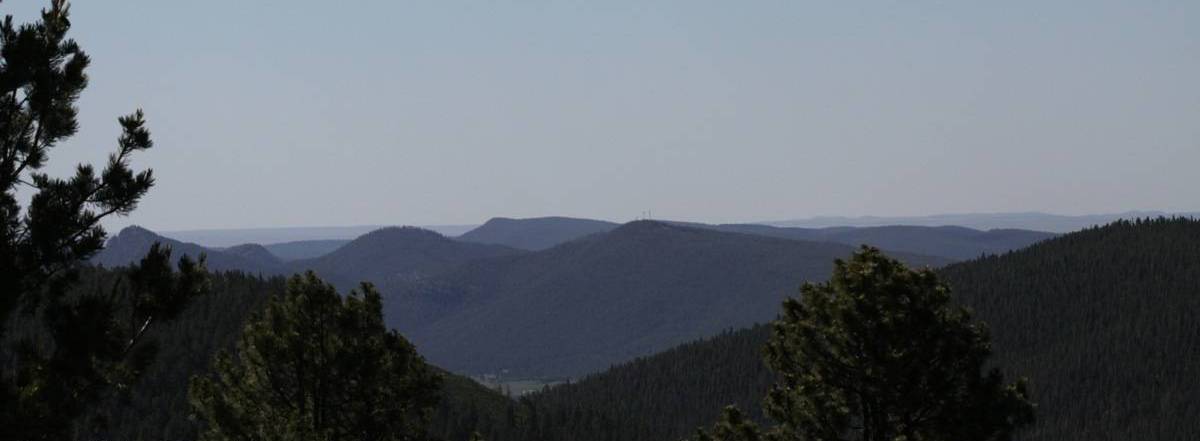

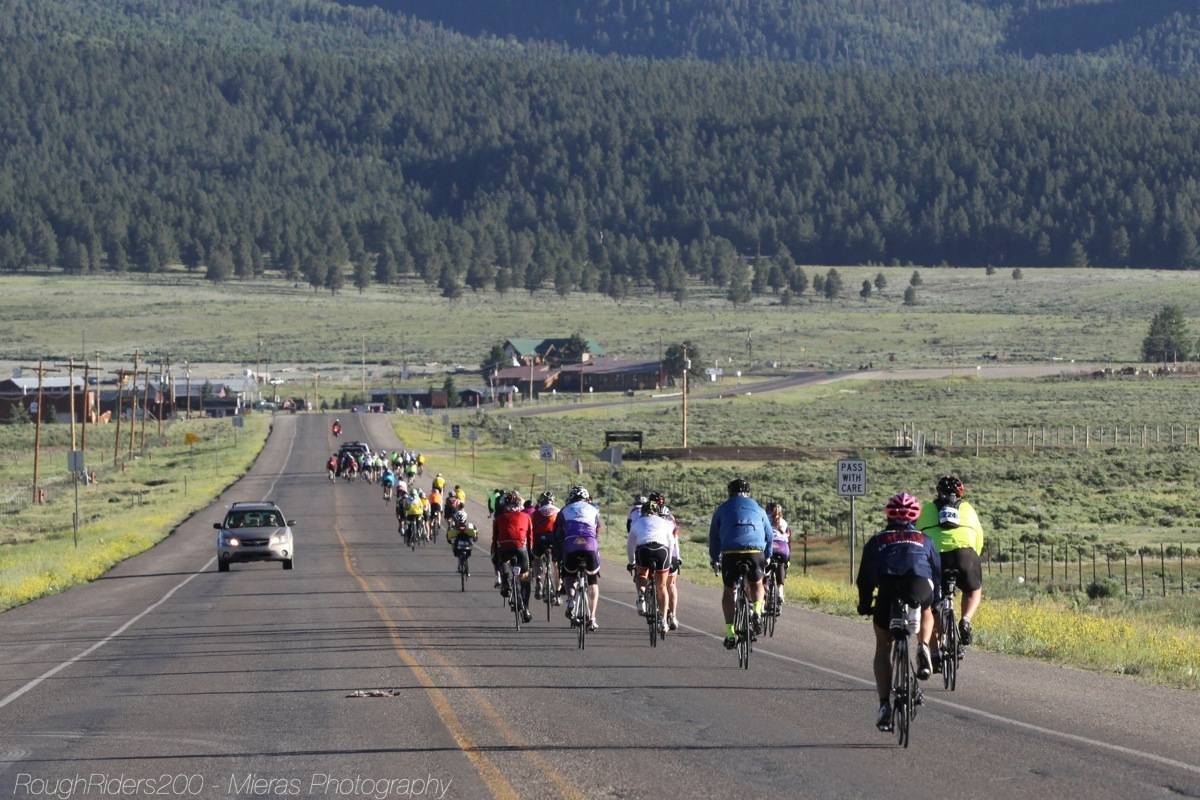
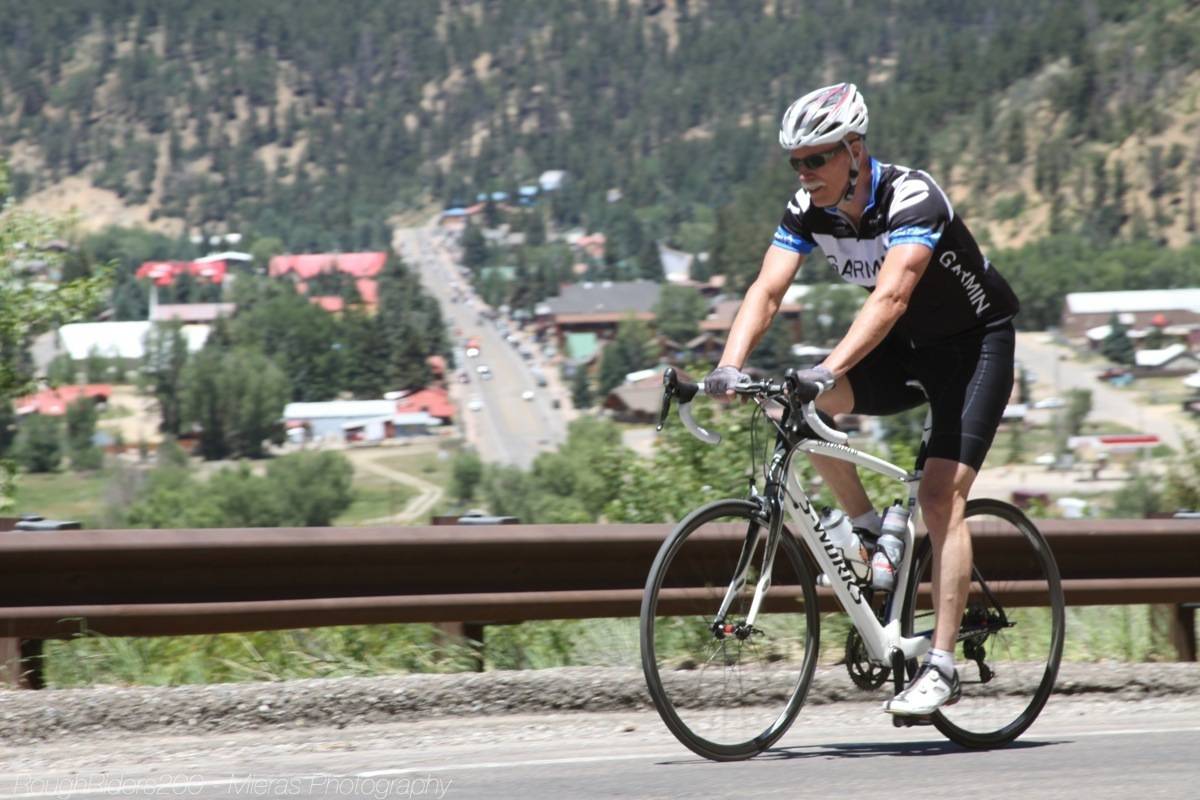
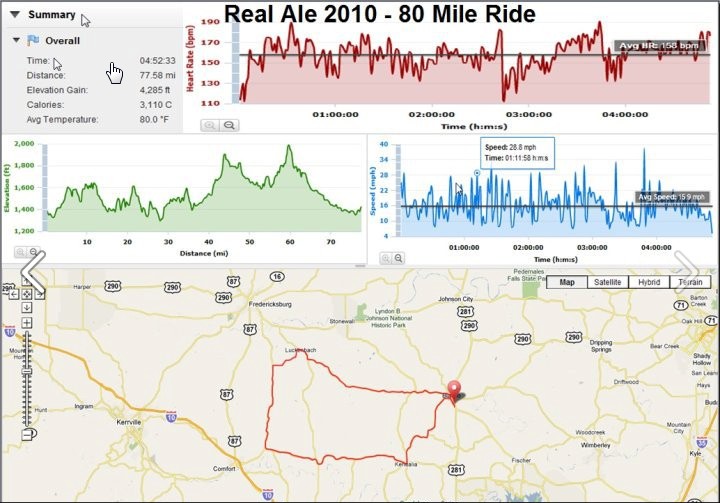
 Bull on a Bike
